

By M. Rahman, PhD, Advisor, Dhaka Straits Times
A Nation Under Unsettled Skies
The air over Bangladesh feels heavy these days — not just with industrial haze or monsoon dust, but with something darker: the smell of sabotage. The “sky of Bangladesh,” once luminous with economic optimism, now seems overcast with mistrust. From the industrial belts of Chittagong to the runways of Dhaka, a pattern of fires, outages, and unexplained disruptions has unsettled citizens and analysts alike.
The concern is not merely about accidents. It is about timing, clustering, and motive. Each incident, when viewed in isolation, appears containable; together, they form a pattern too synchronized to ignore.
At the center of this unfolding uncertainty stands the Dr Muhammad Yunus-led interim government, which unveiled the July National Charter on 17 October 2025, in a ceremony held at the South Plaza of the National Parliament Bhaban in Dhaka.¹ The Charter — emerging from the 2024 July uprising — pledges sweeping reforms in governance, electoral law, and constitutional accountability.
Yet, even as dignitaries signed the document, violent clashes erupted outside Parliament between police and self-styled “July Fighters,” demanding recognition for their role in the protests.² The images of tear gas and broken banners cast an ironic shadow over a day meant to symbolize unity.
Just as the ink on the Charter dried, a series of disruptions began to unfold — so rapid and so destructive that many now speak of a coordinated attempt to shake national stability.
Fires, Fear, and the Shadow of Design
🔥 14 October 2025 — Mirpur, Dhaka
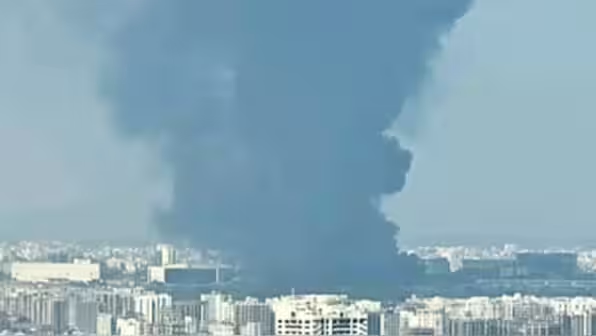
A blaze tore through a garment factory and adjacent chemical warehouse in Mirpur, killing several workers and destroying valuable stock.³ Investigators cited “flammable storage negligence,” but observers were struck by how quickly the fire spread — and by how soon another followed.
🔥 16 October 2025 — Chittagong Export Processing Zone (CEPZ)
Barely two days later, a massive fire engulfed a towel-manufacturing complex at the CEPZ, burning through the heart of Bangladesh’s export economy.⁴ The incident paralyzed production lines and raised alarms in the industrial community. Former fire officials publicly questioned whether the two blazes were “unfortunate coincidences or a planned pattern.”
🔥 18 October 2025 — Hazrat Shahjalal International Airport, Dhaka
Then came the airport fire. Around 2:30 p.m., flames erupted in the cargo village of Hazrat Shahjalal International Airport, grounding flights and crippling logistics.⁵ Authorities called it “a technical fault,” yet many wondered: how could three large-scale fires strike key national assets within four days?
Sidebar: Pattern of Disruptions (July 2024 – October 2025)
| Date | Incident | Location | Analyst Notes |
|---|---|---|---|
| July–Aug 2024 | Internet shutdowns & mobile-data blackouts | Nationwide | Documented by OONI; viewed as deliberate information restriction during student protests. |
| Aug 2024 | Government websites hacked (PM’s Office, Bangladesh Bank) | Dhaka | Cyber defacement during unrest; analysts warned of digital sabotage. |
| 14 Oct 2025 | Fire at garment factory & chemical depot | Mirpur, Dhaka | Clustered with later incidents; flagged for possible arson. |
| 16 Oct 2025 | Fire at towel factory, CEPZ | Chittagong | Damaged major export facility; timing drew suspicion. |
| 18 Oct 2025 | Cargo-village fire, international airport | Dhaka | Paralyzed aviation; third major blaze in four days. |
| 17 Oct 2025 | Clashes at July Charter signing | Dhaka | Political unrest coinciding with reform ceremony. |
Hybrid Sabotage: A New Threat Matrix
The new vocabulary of Bangladesh’s instability is hybrid sabotage — not overt warfare, but a mix of cyberattacks, industrial disruptions, and engineered rumor. The blackouts of July 2024, the website hacks that followed, and now the October 2025 fire cluster all suggest a coordinated strategy aimed at undermining public trust and foreign investor confidence.⁶
Such tactics are not unique to Bangladesh; modern geopolitics increasingly blurs the line between technical failure and targeted destabilization. For a nation striving to maintain neutrality amid global rivalry — balancing ties between China’s Belt and Road network and Western trade frameworks — the temptation for external meddling is high.
Truth as the Antidote to Turmoil
The challenge for Bangladesh is not merely to extinguish fires but to restore faith. That begins with transparency. Investigations into each incident must be independent, time-bound, and public. Silence breeds speculation; only truth dissolves rumor.
The media, likewise, must resist the adrenaline of alarmism. In an age where one viral post can inflame an entire nation, accuracy must outweigh immediacy. Sensational headlines can turn smoke into storm. Journalists must remember that in moments of doubt, restraint is the highest form of responsibility.
And for the citizenry — skepticism must replace cynicism. Before sharing a photo, forwarding a rumor, or amplifying a claim, Bangladeshis must ask: whose story am I spreading, and why? In this era, misinformation is not merely noise — it is a weapon.
Beyond the Smoke: Reclaiming the Horizon
Bangladesh has risen from far graver crises — from cyclones to coups, from pandemics to political paralysis. Yet this moment demands a subtler courage: to stay rational in an atmosphere designed to confuse, and to defend unity when division seems easier.
If the fires of Mirpur (14 Oct), Chittagong (16 Oct), and Dhaka Airport (18 Oct) were more than coincidence, then the real battleground lies not in flames or fiber-optic cables but in the national conscience.
The sky over Bangladesh may still carry the smell of sabotage — but with vigilance, transparency, and truth, the country can clear the air. Stability is not inherited; it must be defended — not with fear, but with facts.


