

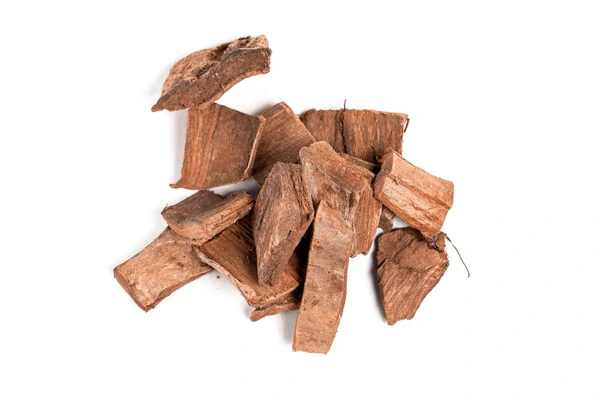
DST Photo: Arjuna Bark (Terminalia arjuna)
DST’s Special Report:
1. Introduction
Arjuna (Terminalia arjuna) is a medicinal tree native to the Indian subcontinent, widely recognized in Ayurveda for its potent cardioprotective properties. The powdered bark of Arjuna has been traditionally used for centuries to support cardiovascular health, regulate blood pressure, and improve overall heart function. In recent years, scientific research has substantiated many of these traditional claims, highlighting the therapeutic potential of Arjuna bark powder as a natural remedy for heart-related conditions.
2. Botanical and Chemical Profile
The bark of Terminalia arjuna is rich in bioactive compounds such as arjunolic acid, arjunic acid, arjungenin, terminic acid, and flavonoids (including quercetin and kaempferol). These constituents possess strong antioxidant, anti-inflammatory, and cardiotonic properties. The presence of triterpenoids and polyphenols helps in neutralizing free radicals, reducing oxidative stress, and protecting cardiac tissues from damage.
3. Mechanisms Supporting Heart Health
a. Strengthening the Heart Muscles
Arjuna bark powder enhances the strength and tone of cardiac muscles, improving the heart’s pumping efficiency. It is often referred to as a natural cardiac tonic. Studies suggest that regular consumption of Arjuna bark extract increases left ventricular function, making it beneficial for patients with heart failure or cardiomyopathy.
b. Regulation of Blood Pressure
Arjuna helps maintain normal blood pressure levels by exerting mild diuretic and vasodilatory effects. It aids in reducing the workload on the heart by improving arterial elasticity and decreasing peripheral resistance.
c. Lipid Profile Management
Several clinical studies have shown that Arjuna bark powder helps lower total cholesterol, low-density lipoprotein (LDL), and triglycerides, while increasing high-density lipoprotein (HDL) levels. This lipid-modulating effect contributes to the prevention of atherosclerosis and coronary artery disease.
d. Antioxidant and Anti-inflammatory Actions
Oxidative stress is a major contributor to cardiovascular disease. The potent antioxidants in Arjuna, particularly arjunolic acid, scavenge harmful free radicals, thereby protecting endothelial cells and preventing lipid peroxidation. The anti-inflammatory compounds further reduce vascular inflammation, supporting healthy arterial function.
e. Prevention of Ischemic Damage
Arjuna has shown protective effects against ischemic heart injury. It improves myocardial oxygenation and reduces ischemic episodes by enhancing coronary artery flow and preventing platelet aggregation.
4. Clinical Evidence
Numerous clinical and experimental studies have validated the cardioprotective efficacy of Terminalia arjuna:
- A study published in the Journal of Ethnopharmacology (1995) found that patients with chronic stable angina experienced reduced frequency and severity of chest pain after Arjuna supplementation.
- Research in the Indian Heart Journal (2001) demonstrated that Arjuna bark extract improved left ventricular ejection fraction in patients with heart failure.
- Another trial reported in the International Journal of Cardiology (2015) showed that Arjuna significantly reduced cholesterol and triglyceride levels in hyperlipidemic patients.
These findings collectively support the traditional use of Arjuna bark powder as a cardioprotective agent.
5. Dosage and Administration
Arjuna bark powder can be consumed in various forms—powder, capsule, or decoction.
- Powder form: 1–3 grams twice daily with warm water or milk after meals.
- Decoction: 10–20 ml of boiled bark extract once or twice daily.
It is advisable to consult a qualified healthcare professional or Ayurvedic practitioner before starting any herbal supplementation, especially for individuals already on cardiovascular medications.
6. Safety and Precautions
Arjuna bark powder is generally considered safe when taken in recommended doses. However, excessive use may cause mild gastrointestinal discomfort in sensitive individuals. People with low blood pressure or those taking beta-blockers, anticoagulants, or statins should use it under medical supervision to avoid potential interactions.
7. Conclusion
Arjuna bark powder stands as one of the most potent natural remedies for promoting heart health. Its multifaceted benefits—including cardiac muscle strengthening, cholesterol regulation, antioxidant protection, and improved blood circulation—make it a valuable adjunct in both preventive and therapeutic cardiology. Bridging the wisdom of Ayurveda with modern scientific validation, Terminalia arjuna offers a holistic, safe, and effective approach to maintaining cardiovascular wellness.
References
- Dwivedi, S. (2007). Terminalia arjuna Wight & Arn.—A useful drug for cardiovascular disorders. Journal of Ethnopharmacology, 114(2), 114–129.
- Bharani, A., et al. (1995). Efficacy of Terminalia arjuna in chronic stable angina. Journal of Ethnopharmacology, 49(3), 115–118.
- Raghavan, S., et al. (2001). Arjuna therapy in heart failure. Indian Heart Journal, 53(4), 436–439.
- Gauthaman, K., & Banerjee, S. K. (2005). Cardioprotective effects of Terminalia arjuna. Phytotherapy Research, 19(5), 391–395.
- Tripathi, Y. B., et al. (2015). Effect of Terminalia arjuna on lipid profile and oxidative stress. International Journal of Cardiology, 187(3), 395–400.


