

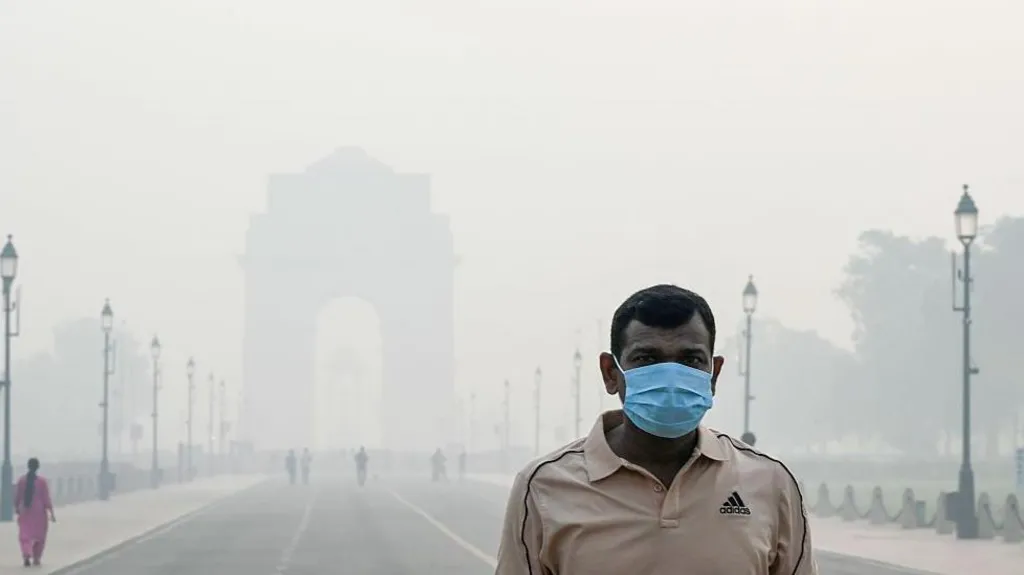
BBC Photo: Delhi’s air quality, identified as “very poor” category this week
Source: BBC
DST News: Every winter, Delhi finds itself trapped in a familiar crisis — suffocating under a dense blanket of toxic haze that irritates eyes, burns throats, and sends air quality monitors into alarm.
This year is no different. Over the past week, Delhi’s air has swung between the “poor” and “very poor” categories, worsening sharply after the Diwali festival as fireworks filled the sky with smoke. Officials reported it was the worst post-Diwali air quality in four years, reviving the city’s annual battle with pollution.
The causes remain the same — a deadly mix of firecracker smoke, vehicular emissions, and crop residue burning in neighboring Punjab, Haryana, and Uttar Pradesh. The onset of winter, with cooler temperatures and stagnant air, traps pollutants close to the surface, creating a toxic haze that refuses to lift.
While some reports claim a decline in stubble burning due to earlier floods, official data from Punjab shows the opposite, a threefold rise in such incidents over the past 10 days. Despite awareness campaigns and subsidies for cleaner alternatives, many farmers continue burning fields because it remains the cheapest option.
Adding to the crisis, India’s top court recently relaxed a five-year ban on firecrackers, allowing so-called “green crackers” for limited hours during Diwali. However, in reality, fireworks went on well beyond the allowed time, with more polluting versions being sold and used openly across the capital.
Residents now complain of coughs, watery eyes, and breathing difficulties. Doctors warn that prolonged exposure to polluted air can weaken the immune system and lead to serious long-term illnesses.
Yet, political blame games persist. Delhi’s government has accused Punjab of encouraging crop burning, while Punjab’s leaders accuse Delhi of misleading citizens about the real causes. Experts argue that only a coordinated, long-term strategy involving both state and federal authorities can bring meaningful change.
For now, as winter sets in, Delhi once again gasps for breath under its recurring cloud of poison, a tragedy both predictable and preventable.


