

BBC Photo
Source: BBC News
DST News: After months of fierce fighting last year, insurgents from the Ta’ang National Liberation Army (TNLA) managed to seize control of Kyaukme, a strategic town on the main trade route linking China’s border to central Myanmar. Located along Asian Highway 14—historically known as the Burma Road—Kyaukme’s fall was hailed as a major victory for the resistance and a sign that the junta’s morale might be weakening since its 2021 coup.
However, the tide has now turned. The military has retaken several towns, including Kyaukme, largely thanks to renewed backing from China, which supports the junta’s controversial plan to hold elections in December. The planned polls have been widely criticized for excluding Aung San Suu Kyi’s National League for Democracy—the legitimate winner of the last election—and for being staged amid widespread conflict across the country.
Determined to secure enough territory to make the election appear credible, the junta has intensified its military operations this year. It has adapted its strategy, incorporating lessons from previous losses and deploying new, more lethal technology. Once outmatched by rebel groups’ use of low-cost drones, the military has now acquired thousands of Chinese-made drones, training its frontline forces to use them with devastating accuracy.
In addition to drones, the army has employed motorized paragliders capable of hovering over rebel areas to drop bombs precisely. Relentless airstrikes using Chinese and Russian aircraft have resulted in widespread destruction and a sharp rise in civilian deaths—believed to exceed 1,000 this year.
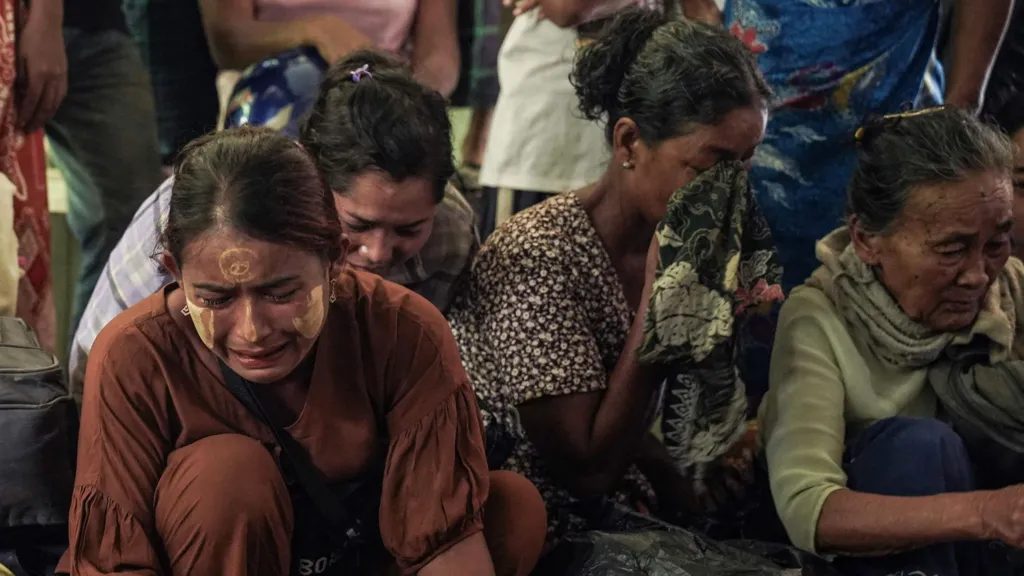
This month, the junta recaptured Kyaukme in just three weeks—a stark contrast to last year’s drawn-out battle. The town’s rapid fall underscores how dramatically the military balance has shifted in the junta’s favor. Kyaukme itself has suffered immense damage: heavy bombardment flattened large sections while TNLA forces held it. Fighter jets dropped 500-pound bombs, and artillery and drone strikes targeted rebel positions on the outskirts. Most residents fled but are slowly beginning to return following the army’s takeover.
“There is heavy fighting every day in Kyaukme and Hsipaw,” TNLA spokesman Tar Parn La told the BBC earlier this month. “This year the military has more troops, heavier weapons, and greater air power. We are doing our best to defend Hsipaw.”
Since that interview, junta forces have also recaptured Hsipaw—the last major TNLA stronghold—reestablishing their control over the vital trade corridor to the Chinese border.


