

DST News: The U.S. House of Representatives is gearing up for a decisive vote Wednesday on a short-term budget plan that could bring an end to the longest government shutdown in American history.
Now in its 42nd day, the shutdown has paralyzed federal operations, left nearly a million workers without pay, and disrupted essential services — from food assistance programs to air travel — as lawmakers remain locked in a political standoff.
The Senate has already passed a temporary spending package to keep government agencies funded for the next two months, and the bill now awaits House approval. Despite their slim majority, Republican leaders have expressed confidence that the proposal will clear the chamber. Democrats, however, have vowed to oppose it.
President Donald Trump has signaled his readiness to sign the bill once it passes Congress. “We’re opening up our country,” Trump said at a Veterans Day event in Arlington, Virginia. “It should have never been closed.”
Mounting Strain Nationwide
The shutdown’s effects have rippled across the country. On Tuesday alone, nearly 1,200 flights were canceled as unpaid air traffic controllers called in sick, forcing many lawmakers to find alternative routes back to Washington.
Republican Congressman Rick Crawford of Arkansas shared on X that he was carpooling with Trent Kelly of Mississippi to the Capitol, while Wisconsin’s Derrick Van Orden opted to ride his Harley-Davidson motorcycle for the 16-hour trip, saying, “It’s going to be chilly, but I’ll do my duty.”
House Set for Showdown
The House Rules Committee advanced the measure after a tense seven-hour overnight session, rejecting Democratic amendments to extend expiring health insurance subsidies — one of the key sticking points during the impasse.
Lawmakers are expected to reconvene at 4 p.m. EST (9 p.m. GMT) for a one-hour debate before voting.
House Minority Leader Hakeem Jeffries of New York criticized the plan as “a reckless Republican effort to continue raising the cost of living for everyday Americans,” expressing frustration with Senate Democrats who sided with Republicans earlier in the week.
Deep Divisions Over Health Subsidies
Democrats have been pushing for the inclusion of tax credits that help 24 million Americans afford health insurance. Republicans, however, refused to make it part of the immediate deal, offering instead to hold a separate vote in December — without any guarantee it would pass.
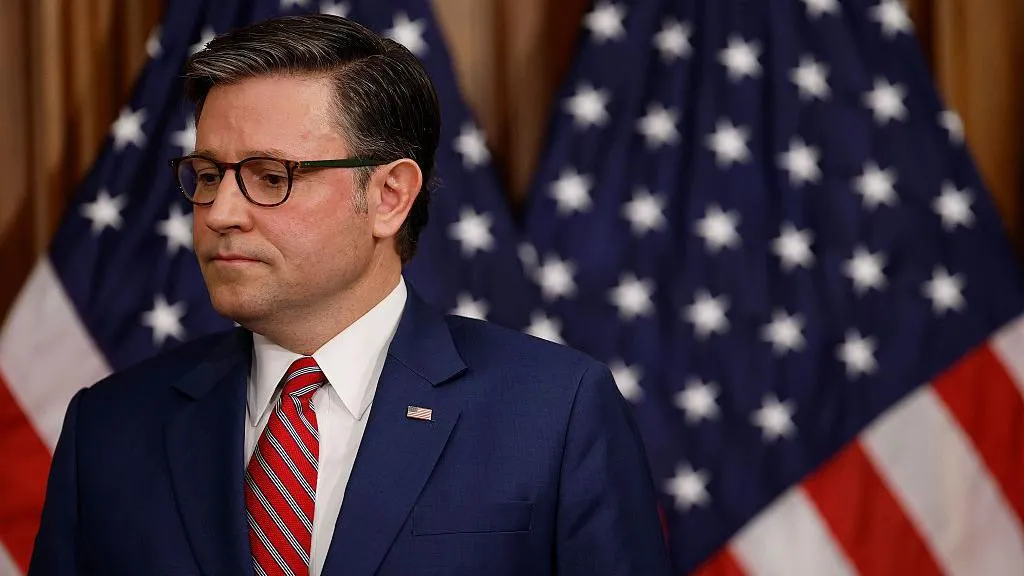
Speaker Mike Johnson, who has kept the House out of session for 53 days to pressure the Senate, faces a razor-thin majority of just five votes once Arizona’s newly elected congresswoman, Democrat Adelita Grijalva, is sworn in on Wednesday.
That leaves Johnson with room to lose only two Republicans on a party-line vote.
A Fragile Fiscal Path Ahead
The proposed budget would continue to add roughly $1.8 trillion annually to the nation’s $38 trillion debt. Yet fiscal conservatives have shown little organized resistance, with Texas Representative Chip Roy saying he was “unaware of any significant opposition” within the Republican ranks.
Even if a few conservative members — such as Thomas Massie of Kentucky or Victoria Spartz of Indiana — defect, Johnson may still secure passage with help from centrist Democrats like Jared Golden of Maine or Henry Cuellar of Texas.
Public Frustration and Political Fallout
Neither party has emerged unscathed. Polls show that while Americans assign slightly more blame to Republicans, Democrats have also faced internal divisions over their approach to the deadlock.
With the current plan offering only a temporary fix, Congress will have just two months before the next funding deadline on January 30 — potentially setting the stage for another fiscal showdown early next year.
Source: BBC


