

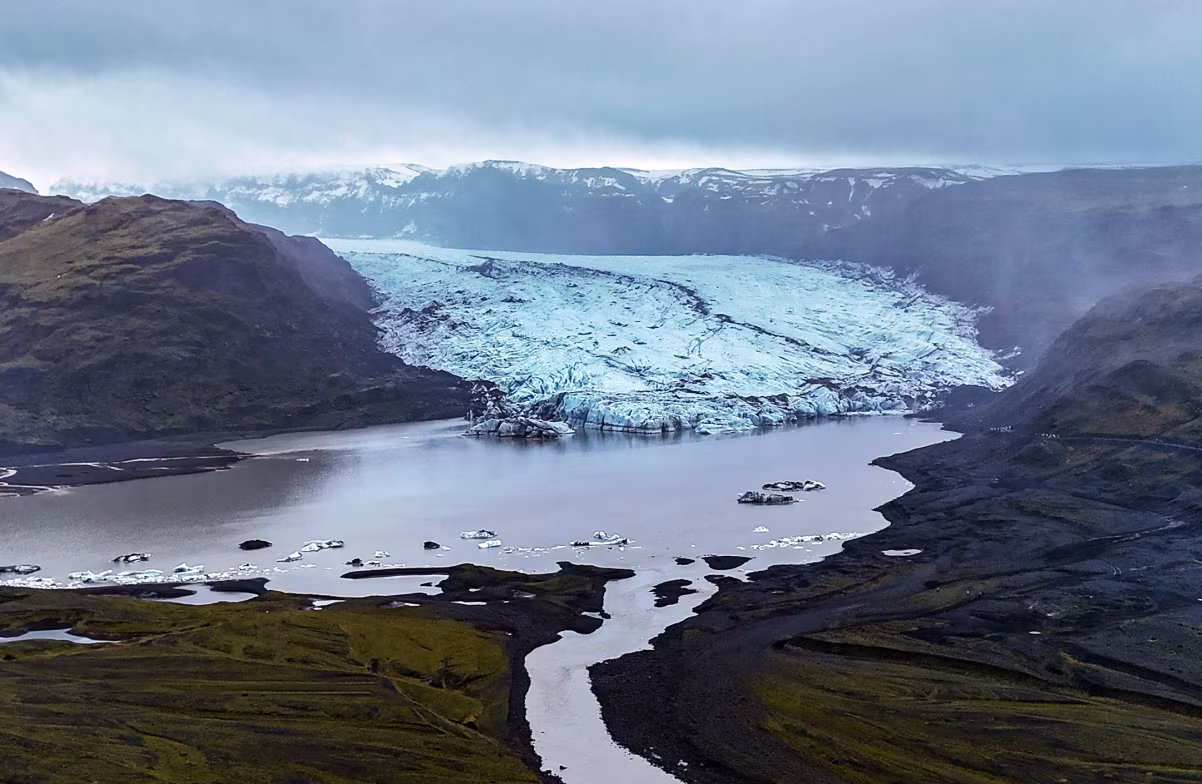
DST News: Iceland’s unusually mild climate depends on a powerful system of ocean currents that circulates heat through the Atlantic. Without this natural conveyor belt, the island nation would be far colder and far more battered by winter storms. Now, with growing scientific evidence suggesting this system could be heading toward collapse, Iceland’s government has taken the extraordinary step of labeling the threat a national security concern — a move that has triggered a top-level response on how to prepare for what officials are calling an “existential” risk.
“Our climate, economy and security are deeply tied to the stability of the ocean currents around us,” said Jóhann Páll Jóhannsson, Iceland’s minister for environment, energy and climate.
At the center of these fears is the Atlantic Meridional Overturning Circulation, or AMOC — a vast looping system that moves warm water northward from the tropics before it cools, sinks and flows back south. Scientists often cite an AMOC collapse as one of the most frightening potential tipping points in the climate crisis. Research increasingly shows that the circulation has been slowing, disrupted by rising global temperatures and changes in ocean salinity. Although scientists still debate how likely a collapse is and when it might occur, some studies warn it could happen before the end of this century.
A shutdown of the circulation “can no longer be dismissed as low-probability,” said Stefan Rahmstorf, a leading physical oceanographer and climatologist at Potsdam University in Germany.
The consequences would be dramatic. A failure of the AMOC would unleash sweeping changes in global weather patterns — from higher sea levels along parts of the United States and Europe, to severe disruption of monsoon systems in Asia and Africa. Europe could face a brutal deep freeze, with sea ice possibly extending as far south as the United Kingdom.
For Iceland, the effects could be even more severe. The country sits at the heart of the region that would cool most sharply, potentially leaving it ringed by sea ice, Rahmstorf said. Jóhannsson warned that such a shift would cripple infrastructure, transportation networks and key industries, including the nation’s vital fishing sector.
The government was briefed on the latest science after a major study published in August raised “grave concerns” about the future stability of the AMOC. By September, Iceland’s National Security Council formally classified the threat as a national security risk — the first time in the country’s history that a climate-related danger has received this designation.
Jóhannsson said the decision signals how seriously Iceland now views the issue and ensures a coordinated, whole-of-government effort to analyze the threat and plan both prevention and adaptation measures.
Rahmstorf praised Iceland’s stance, saying other nations should take similar steps. The impacts of an AMOC collapse would extend far beyond the North Atlantic, with research suggesting devastating losses in agriculture, extreme flooding and major disruptions to societies and economies.
For Iceland, the shift represents a fundamental change in how the nation perceives climate threats. “What we do know is that the current climate might change so drastically that it could become impossible for us to adapt,” Jóhannsson said. “This is not only a matter of science — it is a matter of national survival.”
Source: CNN


