

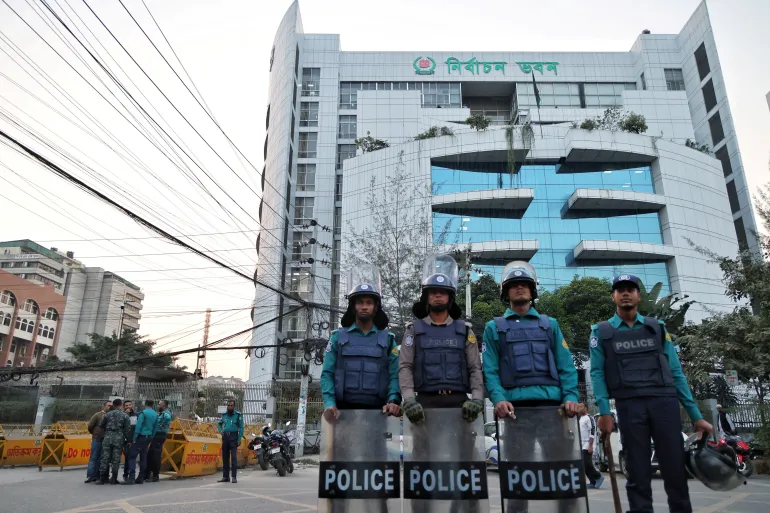
DST News: Bangladesh will head to the polls on February 12 for a national election that marks the country’s first major vote since last year’s student led uprising that forced former prime minister Sheikh Hasina from power.
The announcement came on Thursday when Chief Election Commissioner AMM Nasir Uddin delivered a televised address confirming the date. He also said that a nationwide referendum on political reforms would be held on the same day.
The schedule was released at a time when the caretaker administration, led by Nobel laureate Muhammad Yunus, is struggling to calm continuing unrest. Many citizens have grown impatient over delays to the reforms promised after Hasina’s departure.
Hasina’s political party remains barred from participating. Its leaders have warned that tensions could intensify in the weeks leading to the vote.
Yunus described the election timetable as a moment of progress. In his view, the country has moved closer to restoring democratic norms. He said Bangladesh has reached an important stage in its political recovery and is advancing on a new path shaped by the mass movement that toppled the previous government.
Political uncertainty deepened on Thursday when President Mohammed Shahabuddin said he would resign once the election is over. The president, who holds a largely ceremonial role, told Reuters that he felt humiliated by the interim authorities and intended to leave office halfway through his term.
Many voters are concentrating on several urgent issues. These include rebuilding democratic governance, reviving the crucial garment industry, and repairing relations with India. Ties with New Delhi deteriorated after Hasina fled there during the upheaval.
Election officials estimate that close to 128 million citizens are eligible to vote at more than 42 thousand polling stations in contests for 300 parliamentary seats. Voters will also decide the future of the July Charter, a reform proposal drafted soon after the uprising.
Uddin said the referendum will reveal whether the Charter should guide future restructuring of state institutions.
The proposal includes reducing concentration of power in the executive branch, ensuring greater independence for the judiciary, strengthening the election commission, and preventing political misuse of law enforcement agencies.
The Bangladesh Nationalist Party, led by former prime minister Khaleda Zia, is expected to dominate the campaign. The BNP is running alongside Jamaat e Islami, which is returning to the ballot after being barred since a 2013 court ruling under the country’s secular constitution.
A new political group known as the National Citizen Party, formed by student leaders from the 2024 uprising, faces an uphill challenge. Although the movement played a major role in street protests, it has struggled to build a nationwide organisation that can compete effectively.
The BNP has also announced the end of its long standing alliance with Jamaat e Islami. Party leaders now present the BNP as a liberal democratic alternative in the political landscape that has emerged after Hasina’s exit.


