

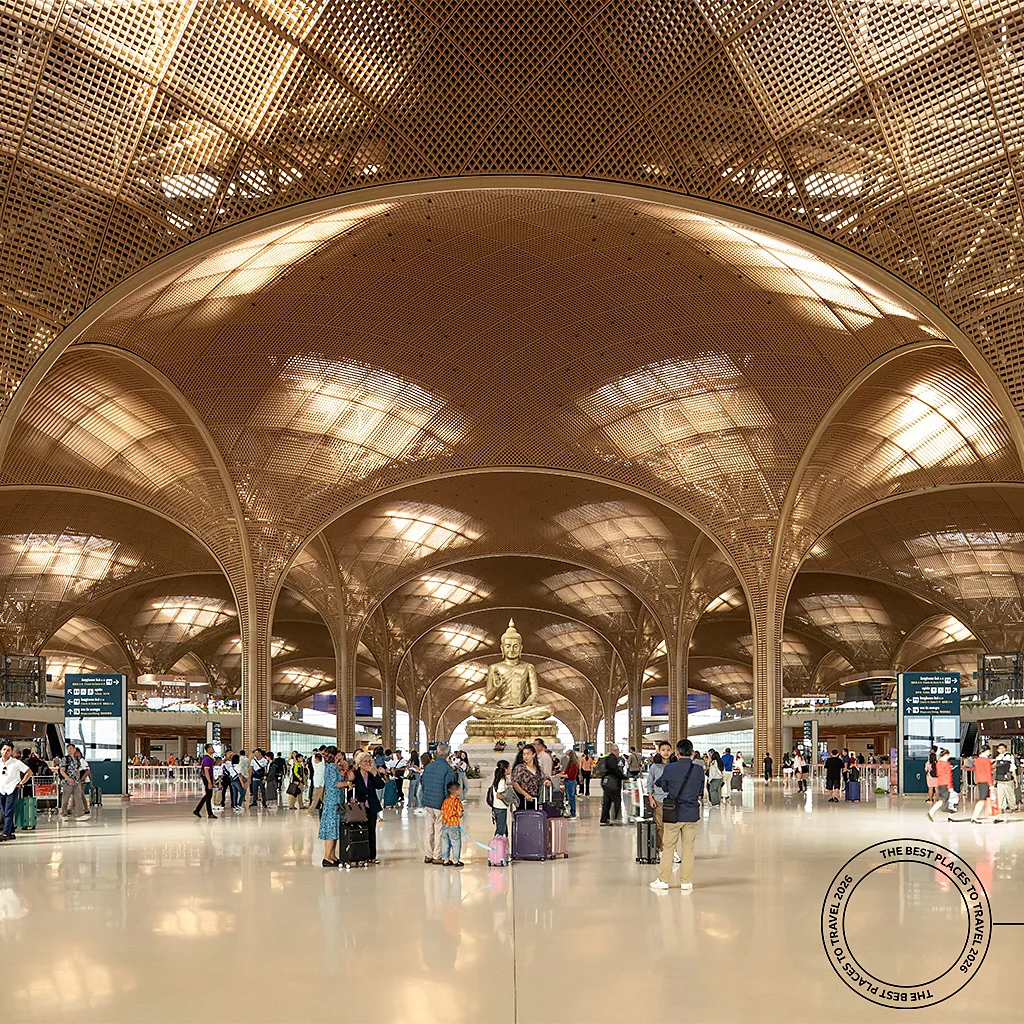
DST News: Long overshadowed by Siem Reap, Phnom Penh is stepping confidently into 2026 with a renewed sense of purpose and pride. The launch of Techo International Airport—Cambodia’s largest-ever infrastructure project—signals a turning point for the capital. Its futuristic terminal, crowned by a striking silver Buddha, is set to transform international access throughout 2026, with new routes from the UAE, Turkey, China and Japan making the city easier to reach than ever before.
On the ground, change is unmistakable. A city that had just one traffic light 15 years ago is now emerging as a showcase for sustainable urban tourism. The new Chaktomuk Walk Street has pedestrianized a stretch of the riverfront, turning weekends into lively festivals of Khmer street food, local crafts and live music. Electric tuk-tuks operated by the newly opened Rosewood Phnom Penh ferry guests quietly through the streets, signaling a shift toward cleaner, greener transport.
Phnom Penh’s welcoming urban character is no accident. It reflects the enduring influence of Cambodia’s pioneering architect Vann Molyvann, who insisted that no building should rise higher than the Royal Palace. His legacy feels newly alive in 2026. Molyvann’s former 1960s home has reopened as a design-led café and mini museum, inspiring a new generation of Cambodian architects, while other Modernist landmarks are being restored by young creatives reclaiming the city’s architectural identity.
Beyond the capital, nature beckons. A six-hour bus journey from Phnom Penh leads to Mondulkiri, where conservation tourism offers meaningful encounters with Cambodia’s wildlife. At Jahoo Wildlife Tours, local guides lead dawn treks through the forest to spot gibbons swinging overhead. Nearby, the Elephant Valley Project provides an ethical sanctuary where rescued elephants roam freely—without rides, performances or exploitation.
Back in the city, a new wave of Gen Z-led sustainable boutiques, craft distilleries and third-culture coffee shops reflects a growing homecoming movement among young Cambodians. Visitors can sip award-winning spirits infused with local botanicals, rediscover Khmer dishes once banned during the war, and wander leafy streets lined with heritage shophouses.
Phnom Penh is no longer simply a gateway to Angkor. It is a destination in its own right—confident, creative and quietly redefining what a Southeast Asian capital can be.
Source: BBC


