

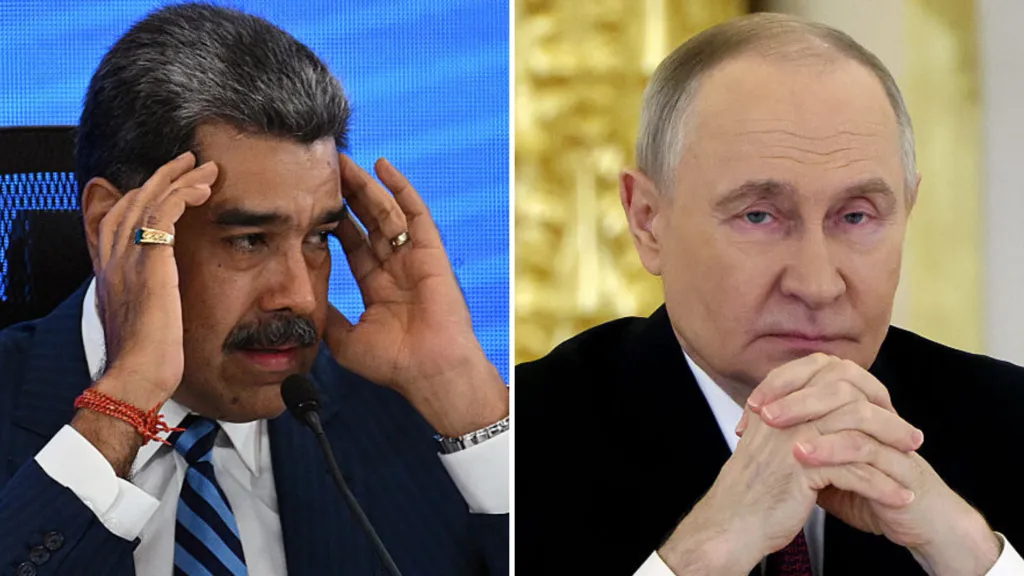
DST News: As Washington tightens the pressure on Venezuela, President Nicolás Maduro may be quietly asking himself an uncomfortable question: who, exactly, is still standing with him?
For years, Maduro could count on two powerful friends—Russia and China. The alliance, forged during the era of Hugo Chávez, was once firm, ideological and practical. Moscow and Beijing offered political backing, financial lifelines and military cooperation, helping Caracas weather sanctions and isolation.
That certainty now looks fragile.
While both Russia and China continue to issue statements supporting Venezuela’s sovereignty and condemning US interference, their actions tell a more cautious story. The backing has become largely symbolic—words rather than weapons, diplomacy rather than dollars.
This shift comes at a tense moment. The United States has moved significant air and naval assets into the Caribbean, including spy planes, a nuclear-powered submarine and thousands of troops. It has also carried out strikes on boats it says were involved in drug trafficking, killing dozens, and recently seized a Venezuelan oil tanker.
Washington insists these moves are about counter-narcotics operations and sanctions enforcement. Maduro, however, sees something else entirely: an attempt to force him from power.
Yet, as pressure mounts, the cavalry is not arriving.
Analysts say Venezuela has slipped down the list of priorities for both Moscow and Beijing, especially since Donald Trump returned to the White House. Russia is deeply entangled in its war in Ukraine, bleeding resources and facing relentless sanctions. China, meanwhile, is trying to stabilize its relationship with Washington amid tariff threats and fragile economic diplomacy.
Neither country appears eager to provoke the US further over a partner that offers limited strategic returns.
Maduro reportedly sought military assistance from both allies late last year. The responses, so far, have been careful. Russian officials have reaffirmed solidarity in principle, and President Vladimir Putin has spoken with Maduro by phone. China has condemned “external interference” and urged restraint. But neither has offered concrete military or financial support.
Behind the scenes, realism seems to be guiding decisions.
Russia, experts say, cannot afford new sanctions. China has little interest in risking fresh tariffs—especially after tentative diplomatic progress with Washington. Venezuela’s battered economy and collapsing oil sector only make the calculation easier. Beijing has already scaled back lending and is now focused on recovering old loans, not extending new ones.
There is also the question of legitimacy.
The July 2024 presidential election, which Maduro claimed to have won, was widely criticized. Electoral authorities released no detailed results, while the opposition published records suggesting their candidate had prevailed. The controversy further weakened Maduro’s standing—internationally and at home.
Some analysts believe both Russia and China are quietly preparing for a post-Maduro future, keeping their distance so they can engage with whoever comes next.
For now, Maduro remains in office—but increasingly isolated. His allies still speak in his defense, but their support no longer carries the weight it once did.
As one observer put it bluntly: the rhetoric remains, but the substance is gone.
Source: BBC


