

SMART, NOT THRIFTY SHOPPING
A major highlight of China’s consumption scene this year has been the remarkable rise of “new consumption” enterprises—among them, the toy company Pop Mart, gold jeweler Laopu Gold, and beverage chain Mixue Bingcheng—whose stock performances soared on the Hong Kong exchange.
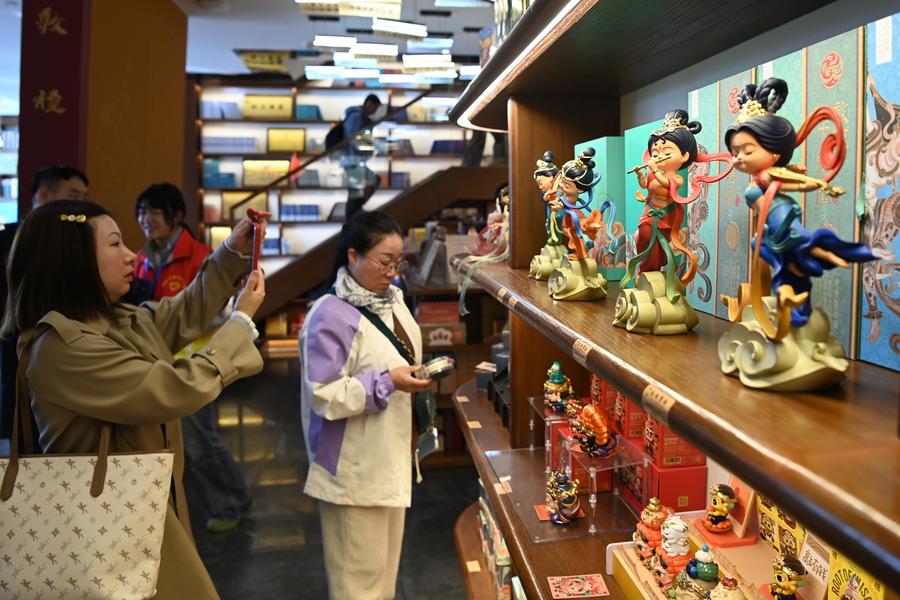
Pop Mart became a global sensation with its Labubu collectible figures, while Laopu Gold attracted long queues of customers by integrating traditional Chinese artistry with modern design.
Despite the jeweler’s relatively high price range—between 10,000 and 60,000 yuan (roughly 1,409–8,456 USD)—its business revenue jumped by 167.5 percent in 2024 to exceed 8.5 billion yuan, and then surged another 251 percent in the first half of 2025.
Meanwhile, Mixue Bingcheng, known for its low-priced ice cream and tea drinks costing less than a dollar, now operates more than 46,000 stores globally—the largest network in the made-to-order beverage industry.
At first glance, these three success stories appear unrelated. Yet, they share a common thread: each appeals to a generation of Chinese consumers who combine emotional satisfaction with practical intelligence—a hallmark of the nation’s evolving consumption mindset.
A phrase circulating widely among young shoppers captures this attitude: “Buy expensive, but never overpay.” Empowered by social media reviews and online comparisons, they pursue the best deals on daily treats like bubble tea but also allow themselves indulgences in products that evoke emotional pleasure—such as collectible figures or pet accessories.
Even when splurging, today’s consumers prioritize value and authenticity. For example, jewelry buyers increasingly prefer gold designs inspired by Chinese culture, viewing them as both stylish investments and symbols of heritage.
According to a McKinsey & Company survey earlier this year, Chinese consumers are “rationalizing their spending and focusing on quality-of-life improvements.”
During the recent eight-day National Day and Mid-Autumn Festival holidays, purchases of eco-friendly, smart, and culturally inspired products rose significantly.
Official figures showed that sales of organic food increased by 27.9 percent year-on-year, while smart home appliances and China-chic apparel grew by 14.3 and 14.1 percent, respectively.
Overall economic indicators confirmed this strength. From January to August 2025, China’s total retail sales of consumer goods expanded by 4.6 percent compared to the previous year.
A report from Huatai Securities observed that, supported by favorable policies, new technologies, and shifting consumer priorities, the market is entering a phase of “high-quality expansion” characterized by diverse growth across sectors.
The report emphasized that the essence of current consumption lies in a philosophical transition—from pursuing quantity to pursuing “quality, individuality, emotional connection, and sustainability.”
EXPERIENCES OVER EXCESS
This smarter approach to spending represents only part of the story. Another defining trend in China’s consumer evolution is the growing preference for experiences over the accumulation of material possessions.
Concert tickets for top artists such as Jay Chou and Eason Chan sold out within seconds, as fans willingly paid premium prices for unforgettable live performances.
Domestic tourism has also witnessed a strong rebound. During the October holiday, the number of domestic trips hit 888 million—123 million more than the previous year—while total tourism revenue climbed to over 809 billion yuan, up by more than 108 billion yuan year-on-year.
Data from the travel platform Fliggy indicated that bookings for performances, guided tours, and folk experiences increased by 78 percent compared to last year’s holiday period.
“Service consumption is no longer merely complementary to goods consumption; it is becoming the main engine of consumer growth,” noted Huatai Securities, describing the shift from survival-based to development-oriented spending.
Throughout the 14th Five-Year Plan period (2021–2025), service-related spending in China expanded rapidly. Between 2020 and 2024, household expenditures on services rose by an average of 9.6 percent annually. In the first eight months of 2025, retail sales in the service sector grew by 5.1 percent—outpacing those of tangible goods.
New consumer experiences—such as sports, leisure, and entertainment—are fueling this surge. The Su Super League, an amateur football competition in Jiangsu Province, has significantly boosted regional tourism and hospitality.
Major professional tournaments have added further momentum. Tickets for events like the WTT China Grand Smash, China Open, and Shanghai Masters sold out swiftly, with spectators traveling to major cities for world-class matches. As of October 3, the China Open and WTT events had recorded revenues of 88 million yuan and 86 million yuan, respectively—both historic highs.
This vibrant consumption climate has also created opportunities for foreign companies in China. McKinsey noted that the nation’s booming outdoor and experiential sectors have sparked a revival of international brands eager to engage with Chinese consumers’ changing lifestyles.
To further promote service consumption, the Chinese government introduced a series of new measures last month. These include developing service platforms, enriching high-quality offerings, stimulating emerging demand, and enhancing fiscal and financial incentives.
According to Vice Minister of Commerce Sheng Qiuping, the country plans to expand access to high-quality cultural, tourism, and sports resources while opening pilot programs in telecommunications, healthcare, and education.
“Service consumption is set to become a dominant mode of spending and will play an increasingly important role in driving economic growth,” Sheng said.


