

Source: BBC
DST News: A new study has revealed that the country’s tropical rainforests, once powerful carbon sinks, have become net carbon sources, making them the first in the world to do so.
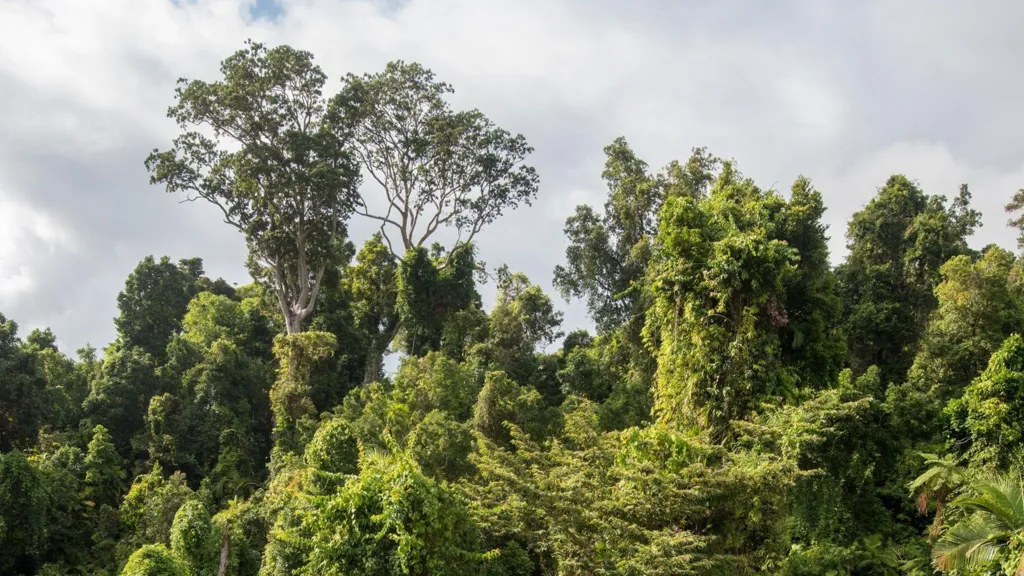
Traditionally, rainforests act as “carbon sinks,” taking in more carbon dioxide than they release, as the growth of new trees offsets the carbon emitted by dying ones. However, researchers studying forests in Queensland found that rising temperatures have led to a higher rate of tree deaths than new growth.
The study, published in the journal Nature, carries major implications for global climate goals that rely on ecosystems like rainforests to absorb carbon emissions. “Current models may be overestimating how much tropical forests can offset fossil fuel emissions,” said lead author Dr. Hannah Carle from Western Sydney University.
According to the research, declining tree growth has caused the accumulated wood from dead trees — known as woody biomass — to become a net carbon emitter rather than an absorber, a change that began roughly 25 years ago.
“Forests play a crucial role in reducing the worst impacts of climate change by absorbing carbon dioxide from burning fossil fuels,” Dr. Carle explained. “But our findings show that this ability is being undermined.”
She attributed the increase in tree mortality to climate-related factors, including more intense heat, drought, and atmospheric dryness. The study, based on 49 years of data from 20 Queensland rainforest sites, also found that more frequent and powerful cyclones have been destroying trees faster than they can regrow.
“This study provides the first evidence that Australia’s moist tropical forests have undergone this shift in woody biomass,” Dr. Carle said. “It’s a significant warning — a kind of canary in the coal mine.”
Senior author Professor Patrick Meir called the findings “deeply concerning,” telling AFP that other tropical forests might show similar patterns in the future, though additional research is needed to confirm this.
Australia, one of the world’s largest per-capita polluters, recently set a new goal to cut its carbon emissions by at least 62% from 2005 levels within the next decade. However, the government continues to face criticism for its ongoing dependence on fossil fuels, including its decision to allow Woodside’s massive North West Shelf gas project to continue operating for another 40 years.
A recent climate report also found that Australia has already surpassed 1.5°C of warming and warned that all communities will face “cascading, compounding, and concurrent” climate-related threats in the years ahead.


