

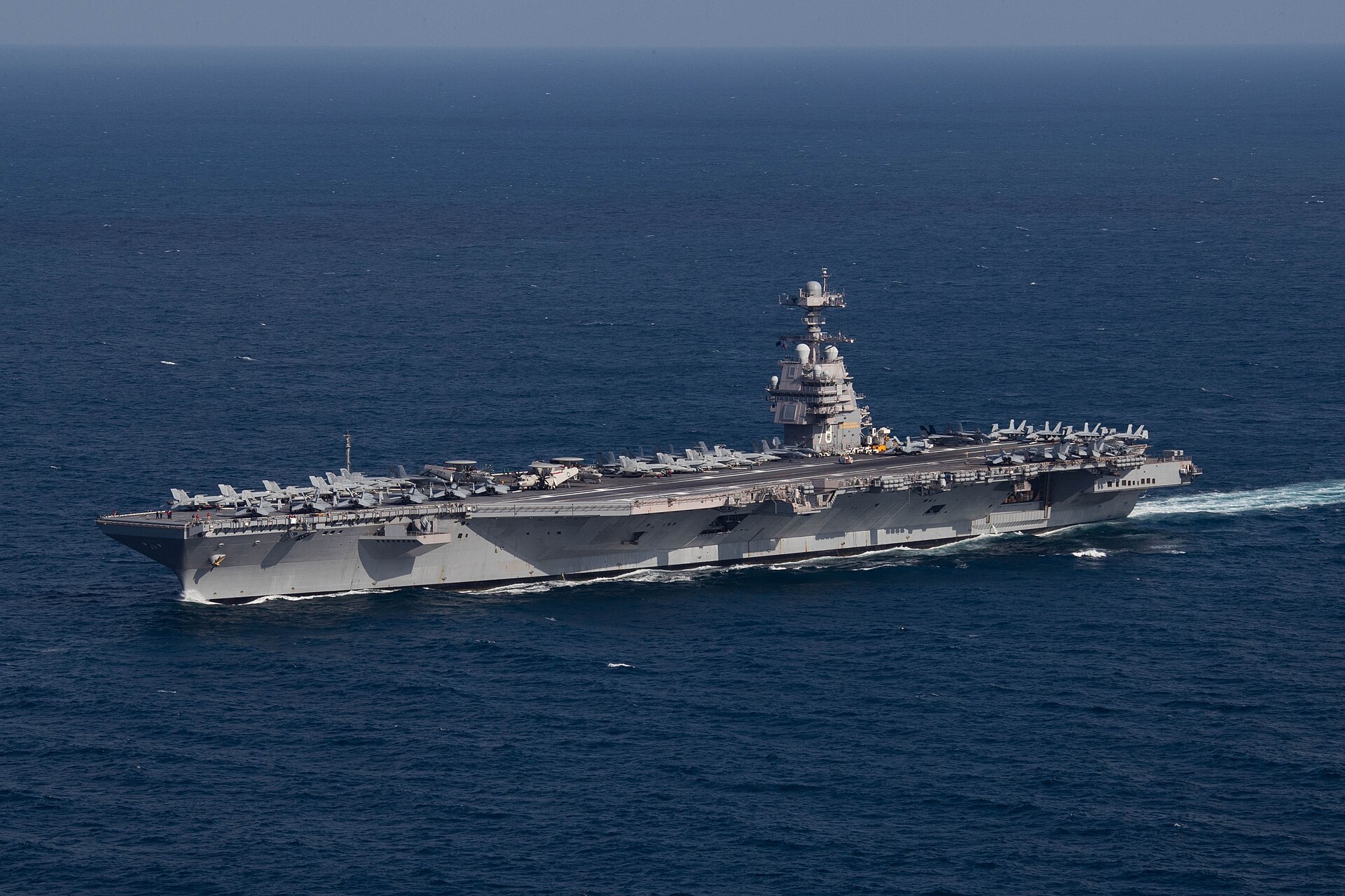
Wikipedia Photo: The world’s largest warship, the USS Gerald R. Ford
Source: BBC News
DST News: Venezuelan President Nicolás Maduro has accused the United States of “fabricating a war” after Washington ordered the world’s largest warship, the USS Gerald R. Ford, to the Caribbean in what marks a major escalation of military activity in the region.
US Defense Secretary Pete Hegseth directed the aircraft carrier—capable of carrying up to 90 planes—to leave the Mediterranean on Friday. “They are fabricating a new eternal war,” Maduro told state media. “They said they would never again get involved in war, but here they are creating one.”
The US claims its growing military presence in the Caribbean, which includes warships, a nuclear submarine, and F-35 fighter jets, is aimed at combating drug trafficking. Ten airstrikes have reportedly been launched against vessels linked to narcotics smugglers, including one on Friday targeting a ship allegedly tied to the Venezuelan gang Tren de Aragua, killing six people.
However, regional leaders and analysts have condemned the strikes, questioning their legality and suggesting they may be part of a broader attempt to destabilize the Maduro government. Critics within the US have also accused the Trump administration of using the anti-drug campaign as a political weapon against Caracas.
“This is about regime change,” said Dr. Christopher Sabatini, a senior fellow at Chatham House. “The show of force is meant to frighten Venezuela’s military and inner circle into turning against Maduro.”
The Pentagon said the USS Gerald R. Ford will operate under the US Southern Command, covering Central and South America and the Caribbean, to “enhance and augment existing capabilities” against transnational criminal organizations.
President Donald Trump has hinted at possible “land action” in Venezuela, telling reporters the US has “the sea very well under control.” CNN has reported that the administration is considering strikes on cocaine production and trafficking routes inside Venezuela.
The carrier’s last known position was off the coast of Croatia three days ago, marking a significant step in the US military buildup near Venezuela. Its deployment, capable of supporting both air and ground operations, is expected to heighten tensions with Caracas.
The US has conducted a string of maritime strikes since early September, killing at least 43 people, according to official figures. Lawmakers from both parties have raised concerns over the legality of these operations, arguing that Congress has not authorized them.
Republican Senator Rand Paul has insisted that such strikes require congressional approval, while former State Department lawyer Brian Finucane warned the situation represents a “constitutional crisis,” with Congress failing to assert its authority over the use of military force.
Secretary of State Marco Rubio defended the operations, saying, “If people want to stop seeing drug boats blow up, stop sending drugs to the United States.”
Maduro, long an adversary of Trump, has denied US allegations linking him to drug trafficking, calling the campaign “a pretext for aggression.”


