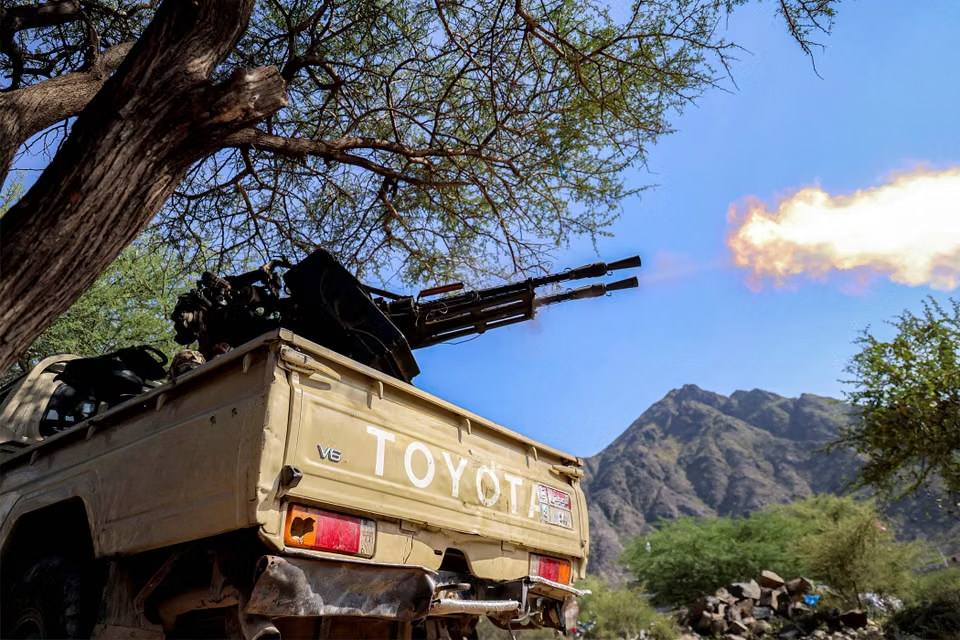
Houthi military spokesperson Yahya Saree said the group launched ballistic missiles at the Defense Ministry and the Ras Tanura refinery in Saudi Arabia’s Eastern Province. He claimed the refinery attack caused major fires. However, the full extent of the damage and any disruption to oil-loading operations remained unclear.
Saudi authorities said they intercepted two ballistic missiles directed toward Riyadh and three others targeting the Eastern Province, according to reports. Residents in the capital received emergency alerts advising them to seek shelter as explosions shook windows in the city center.
The Ras Tanura complex, located along Saudi Arabia’s Gulf coast, is one of the Middle East’s largest refining facilities, with a capacity of approximately 550,000 barrels per day. Its strategic importance makes any attack on the site a potential concern for regional energy supplies and international oil markets.
The Houthis also claimed to have targeted two military transport aircraft at locations in southern Saudi Arabia and launched a drone toward Abha airport. These claims were not independently verified in the report.
Houthis Warn Egypt Over Military Support for Saudi Arabia
The latest attacks followed Egypt’s parliamentary authorization of defensive military support for Saudi Arabia, a measure requested by President Abdel Fattah al-Sisi. Houthi political bureau member Mohammed Ali al-Houthi condemned the decision, describing it as a declaration of war against Yemen.
The precise nature of the Egyptian military support remained unclear. The Houthi statement came amid wider diplomatic efforts to reduce regional tensions, including a visit to Tehran by Saudi Arabia’s defense minister, Pakistan’s army chief and Turkey’s intelligence chief.
Saudi Arabia, Turkey and Pakistan have also signed a mutual defense agreement under which an attack on one member is to be treated as an attack on all three, raising further questions about the potential regional implications of the escalating conflict.
Regional Conflict Raises Security and Energy Concerns
The renewed confrontation has added pressure to an already volatile regional security environment. Repeated attacks on Saudi territory and energy infrastructure could threaten civilian safety, disrupt maritime transport and create uncertainty in global oil markets.
Although Saudi Arabia reported intercepting the missiles, the competing claims surrounding the attacks highlight the difficulty of independently assessing the scale of damage and the military consequences.
With tensions involving Yemen, Saudi Arabia, Iran and other regional powers continuing to intensify, the situation remains a significant concern for Middle Eastern security and international energy markets.
Source: www.lemonde.fr