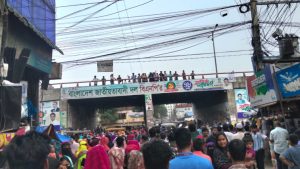
Bangladesh’s garment industry is once again facing serious disruption as thousands of workers take to the streets demanding higher wages and better working conditions. The renewed unrest, factory closures and confrontations between workers and law enforcement agencies highlight a fundamental challenge facing the country: how to balance industrial competitiveness with the economic security and dignity of those who sustain the industry.
The demand for a minimum monthly wage of Tk 30,000, compared with the existing minimum of Tk 12,500, reflects the growing financial pressures confronting garment workers. Persistent inflation, rising food prices, increasing housing costs and other essential expenses have made it increasingly difficult for low-income families to maintain a decent standard of living. For workers who contribute significantly to the country’s export earnings, the demand for a reasonable wage cannot simply be dismissed as an industrial dispute.
At the same time, Bangladesh’s garment sector operates in a highly competitive international market. Factory owners face rising production costs, energy uncertainties, fluctuating global demand and pressure from international buyers to maintain competitive prices. Prolonged industrial unrest, production interruptions and damaged facilities could undermine the confidence of international buyers and threaten the livelihoods of millions of workers.
However, maintaining competitiveness should not come at the expense of workers’ welfare. Nor should legitimate wage demands be allowed to escalate into violence, vandalism and the destruction of industrial property. Both sides must recognize that the long-term sustainability of the garment industry depends on cooperation, mutual trust and responsible negotiation.
The government’s formation of a wage board is a welcome step, but it must produce a realistic and time-bound solution. Wage adjustments should reflect the actual cost of living, while allowing businesses sufficient scope to remain financially viable. A phased increase, accompanied by regular reviews and effective enforcement, could provide a practical way forward.
Equally important is the responsibility of international fashion brands and retailers. They benefit substantially from Bangladesh’s competitive manufacturing sector and must ensure that purchasing prices and contractual arrangements allow local manufacturers to pay workers fairly. Demanding lower prices while expecting higher labor standards creates an imbalance that ultimately harms the workforce.
The government must also strengthen labor inspections, ensure timely payment of wages and benefits, and establish effective mechanisms for resolving workplace disputes. Trade unions should be allowed to represent workers’ interests responsibly, while factory owners must engage in meaningful dialogue rather than relying on temporary closures or confrontational approaches.
Bangladesh’s garment industry is more than an export-oriented business. It is a major source of employment, foreign exchange and economic empowerment, particularly for women. Its future cannot be secured through low wages alone. Productivity, technological advancement, skills development, workplace safety and fair labor practices must become central to the industry’s development strategy.
The present crisis should therefore serve as an opportunity to reconsider the relationship between economic growth and social justice. A successful garment industry must be measured not only by export earnings and international market share but also by the quality of life it provides to its workers.
Bangladesh cannot build a sustainable export economy on the insecurity of its workforce. Fair wages, responsible management and constructive government intervention are not obstacles to industrial progress; they are essential foundations for it. The time has come to move beyond recurring protests and establish a fair, stable and mutually beneficial industrial relationship.