DST News: The Trump administration is preparing to deport dozens of Afghan immigrants and asylum seekers to Pakistan on what would be the first flight of its kind, according to a senior U.S. administration official. The proposed deportation flight, which has not been publicly announced, could take place as early as Monday, rights advocates and families of detainees say.
The plan has raised serious concerns among human rights advocates, who warn that the deportees could eventually be sent back to Taliban-controlled Afghanistan, where they may face persecution, imprisonment or even death.
Some of those facing deportation are family members of Afghans who worked alongside U.S. military forces during the 20-year war against the Taliban. With the Taliban now back in power, returning these individuals to Afghanistan could expose them to serious danger.
For decades, the United States accepted Afghan refugees fleeing war and political instability. Tens of thousands more arrived following the chaotic withdrawal of U.S.-led forces from Afghanistan in 2021. However, President Donald Trump suspended refugee admissions, including those from Afghanistan, after returning to office last year as part of his broader immigration crackdown.
The administration has also deported thousands of migrants to countries other than their countries of origin, particularly in Africa. Immigration lawyers argue that such third-country deportations are being used to bypass international protections against returning asylum seekers to places where their lives or freedom could be threatened. The legality of these arrangements is expected to be considered by the U.S. Supreme Court in December.
Although the details of any formal agreement between Washington and Islamabad remain unclear, a senior administration official said the U.S. charter flight could not land in Pakistan without the Pakistani government’s knowledge and approval. The proposed deportation plan was previously reported by Bloomberg and The New York Times.
Shawn VanDiver, president of the San Diego-based advocacy organisation AfghanEvac, said the group had confirmed that at least 80 Afghans had recently been transferred to Louisiana from 34 Immigration and Customs Enforcement (ICE) facilities across the United States. Nineteen of them reportedly had no legal representation.
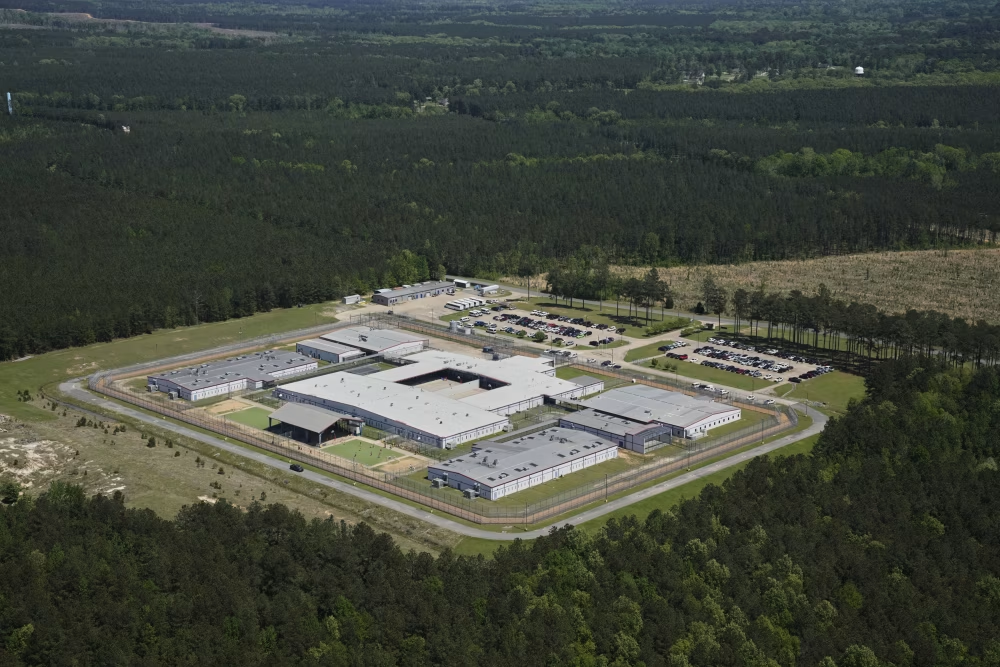
VanDiver said hundreds of Afghan detainees could potentially be held at the Central Louisiana ICE Processing Center, which has been used as a major detention facility before deportations.
Risk of being returned to Afghanistan
Afghans deported to Pakistan may not be able to remain there for long. Pakistan, which has hosted millions of Afghan refugees for decades, began a nationwide crackdown in 2023, forcing hundreds of thousands to leave and deporting many others.
Those returned to Afghanistan would face a country struggling with multiple humanitarian crises, widespread malnutrition and an ongoing military conflict with neighbouring Pakistan. Women and girls also continue to face severe restrictions under the Taliban’s hard-line Islamic policies.
VanDiver argued that the Trump administration was likely aware that Afghans sent to Pakistan could subsequently be returned to Afghanistan.
“You don’t have to be that smart to figure out that they’re sending them to Pakistan so that Pakistan will finish the job,” he said.
He added that all Afghans arriving from the United States could attract suspicion from the Taliban, regardless of whether they or their relatives had worked with American forces. They could face persecution, imprisonment or worse.
A senior administration official, speaking anonymously because they were not authorised to comment publicly, indicated that the White House was not particularly concerned about what might happen to the deportees.
“The administration’s position is, ‘These individuals do not have status in our country, therefore we don’t really care what happens to them,'” the official said.
VanDiver and other advocates warned that the treatment of Afghan allies could also have long-term implications for U.S. national security. They argue that abandoning people who previously cooperated with American forces could discourage individuals in other countries from assisting U.S. troops in future conflicts.
Asked whether the administration was concerned about these potential consequences, the official responded, “I don’t think they care.”
The White House referred questions about the deportation plan to the Department of Homeland Security (DHS). A department spokesperson said the agency could not confirm specific removal operations for “operational security reasons.” Immigration and Customs Enforcement (ICE) did not respond to requests for comment.
A State Department spokesperson said the agency had “no plans to announce” and reiterated that countries should be able to manage their borders and immigration systems to protect the safety, security and prosperity of their citizens.
Pakistan’s Ministry of Foreign Affairs and its embassy in Washington did not respond to requests for comment.
The senior administration official said those scheduled for deportation could include individuals with existing removal orders, rejected asylum applications and people whose Temporary Protected Status had been terminated by the Trump administration.
According to VanDiver, many of the Afghans facing deportation originally sought asylum after entering the United States through Mexico, while some still have pending asylum applications.
‘We just sat there and cried’
The uncertainty surrounding the deportation plan has caused severe distress among detainees and their families.
Charlotte, a U.S. citizen whose Afghan husband has been held in ICE detention since early 2025, said her husband was transferred from Pennsylvania to the Louisiana facility this month and informed that he could be deported in early November. She withheld her full name because of concerns that her husband could become a Taliban target.
Charlotte said she and her husband had been visiting relatives in Maryland last year when he accidentally crossed into neighbouring West Virginia and was stopped by police. Although he had a valid Illinois driver’s licence, he was not carrying his work permit at the time.
She recalled that the officer told her husband he was an ICE agent and that he would be transferred to immigration custody, regardless of whether the charges were dismissed or he possessed valid work authorisation and Social Security documentation.
Charlotte said the incident occurred despite her husband’s asylum application having remained pending for nine years.
To remain close to him, she sold their home in Illinois and moved to Maryland with their six-year-old son. This allowed them to visit her husband at the Moshannon Valley Processing Center in Pennsylvania, approximately 100 miles away.
“I lost my nice house, our car, we left everything behind,” she said.
During the following 20 months, Charlotte and her son visited him regularly. However, their meetings took place behind a glass partition.
“They never let him hug him one time,” she said. “We just sat there and cried every time.”
Despite the emotional difficulties, the family at least knew where he was and that he was safe. His transfer to Louisiana has made the situation even harder.
“Now we can’t even visit or even say goodbye, he’s over 1,200 miles away,” she said.
The possibility that her husband could be deported to Pakistan and subsequently Afghanistan has intensified her fears. He has not visited Afghanistan since 2016 and has reportedly started growing his beard to comply with the Taliban’s strict regulations on men’s facial hair.
“I’m just terrified that he’s not going to be safe,” she said, adding that she fears he could end up imprisoned without anyone being able to help him.
Charlotte believes her husband was targeted for deportation because of a previous conviction for a nonviolent offence that has since been resolved.
“I still don’t think this should end our entire life, for a child not to see his dad,” she said.
She added that their son had become deeply distressed by the situation.
“He’s completely devastated and traumatized,” she said. “He wants to fight. He wants to go protest. He wants to speak to Donald Trump. He basically knows so much more than he should.”
Concerns extend to Afghan refugees stranded in Qatar
The deportation preparations come nearly a year after a shooting in Washington killed one National Guard member and seriously injured another. The suspect, an Afghan national who had served alongside U.S. troops in Afghanistan, was evacuated to the United States in 2021 and had been granted asylum by the Trump administration. Immigration restrictions were tightened following the incident.
VanDiver suggested that the proposed deportation flight to Pakistan could also serve as a test case for the administration’s future plans involving Camp As Sayliyah, a U.S.-run facility in Qatar where more than 1,000 Afghans awaiting resettlement in the United States have remained stranded since Trump returned to office last year.
When asked about the claim, the White House again referred questions to DHS, which declined to confirm any specific deportation operations.
According to AfghanEvac, the camp housed 287 men, 319 women and 433 children as of July. Most of the residents had already received approval for resettlement in the United States following extensive security screening. Many of the adults had previously worked alongside American military forces in Afghanistan.
The group also includes 150 relatives of U.S. military service members, according to AfghanEvac.
Earlier this year, the State Department announced that everyone at the camp would be relocated by March 31. The deadline was subsequently extended to September 30. In September, however, the Trump administration postponed the camp’s closure by another nine months, The Associated Press reported.
The administration had also considered relocating the Afghans at Camp As Sayliyah to the Democratic Republic of the Congo earlier this year, despite the country experiencing the fastest-growing Ebola outbreak in history.
In a statement issued Friday, AfghanEvac accused the Trump administration of preparing the deportation flight while public attention was focused on the upcoming midterm elections, hoping the move would go largely unnoticed.
“The government won’t say where these flights land, because it knows what happens to the people on them when they do,” the organisation said. “A government confident in what it is doing does not hide it.”
Source: NBC NEWS