DST News: Some people can function perfectly well on remarkably little sleep. However, it can be difficult to know whether you are genuinely one of them.
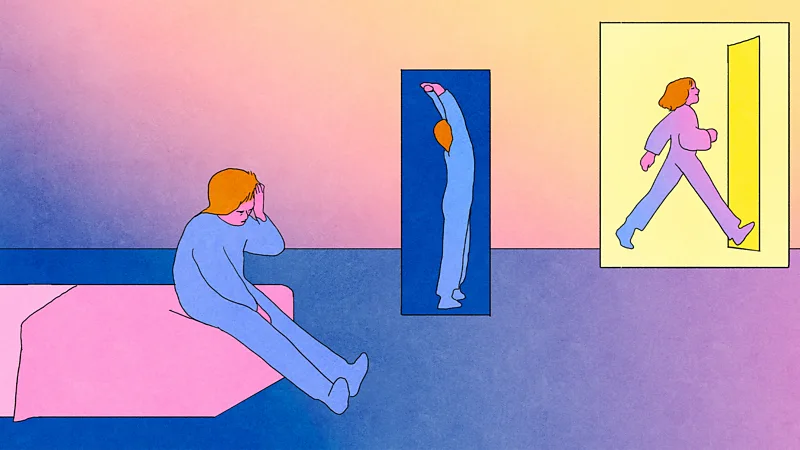
Aimee Pugh Bernard has needed little sleep for as long as she can remember. These days, she usually goes to bed around 22:00 and wakes up at about 04:30.
“I’m wide awake. I cannot stay in bed,” she says.
Sometimes Bernard struggles to fall asleep immediately and gets only five hours of rest. Yet she generally feels energetic the following day. She walks her dog, completes an hour-long gym session and gets 1.5 hours of work done before 08:00.
Her friends are often amazed by how much she can accomplish on so little sleep. But it is normal in her family: her father and brother are the same.
Most people, however, need considerably more sleep. According to the US National Sleep Foundation’s latest review of the evidence, adults aged 26 to 64 generally require seven to nine hours of sleep every 24 hours.
Why people differ so widely in their sleep requirements has long puzzled scientists. In recent years, however, researchers have identified numerous ways in which genetics influence sleep patterns. From rare mutations carried by people such as Bernard to hundreds of more common genetic variations, scientists are beginning to understand why some people can manage with very little sleep.
In the future, these discoveries could help protect people who do not get enough sleep from some of its usual consequences.
The first clues
Bernard discovered the likely explanation for her unusual sleeping pattern in 2019.
A research team at the University of California, San Francisco, had identified a genetic mutation linked to sleep duration in humans. People carrying the mutation tended to go to bed at fairly conventional times but woke up very early, often sleeping between four and six-and-a-half hours a night.
After sending a blood sample to the researchers, Bernard discovered that she carried the mutation.
The rare, inherited condition is known as familial natural short sleep (FNSS). Since then, scientists have identified several other mutations associated with the condition.
One of the biggest mysteries surrounding FNSS is why people with the condition appear to function normally despite sleeping so little, says Ying-Hui Fu, the molecular biologist who led the research. Scientists are still investigating the reasons.
There is intriguing evidence that genetic variations linked to FNSS may not only reduce sleep duration but also protect carriers against some of the negative effects of insufficient sleep, including memory problems.
In a 2019 experiment, Fu’s team introduced an FNSS-related mutation into mice. The researchers found that mice carrying the variant slept less but appeared to be protected from memory deficits. Another experiment suggested that mice with some of these genetic variations were less likely to develop a mouse version of Alzheimer’s disease.
An international research team in 2014 also investigated a pair of fraternal twins in which one carried a short-sleep mutation and the other did not.
The researchers found that the twin with the mutation regularly slept about an hour less than his sibling. When both were kept awake continuously for 38 hours, the carrier twin experienced about 40% fewer performance lapses than his brother.
The study also revealed differences in their sleep patterns. Although the carrier twin slept less, he obtained almost the same amount of non-REM sleep as his brother. This included slow-wave, or deep, sleep, suggesting that he may have gained more benefits from the sleep he did get.
Pharmaceutical possibilities
Research into the subject is continuing, and Fu says further investigation is essential.
In recent years, interest has grown in how these genetic discoveries might be used to help people. Pharmaceutical companies hope that a better understanding of the variations could eventually lead to drugs for treating sleep disorders or help military personnel function with less sleep.
However, scientists first need to establish whether these genetic variations genuinely protect short sleepers from harmful effects and understand exactly how they work. Without that knowledge, developing drugs could lead to unexpected side effects.
“You have to understand how it works,” Fu says. “You don’t want to sleep less and then get Alzheimer’s or Parkinson’s or cancer after 10 years, or five years, or 20 years.”
Although the rare mutations associated with FNSS are among the most striking examples, they represent only a small part of the genetic factors that influence sleep duration.
Researchers estimate that sleep duration is between 30% and 65% heritable. This means genetics may account for up to 65% of the differences in how long people sleep.
Scientists have so far identified several hundred regions of the genome that influence sleep duration. A recent analysis of data from nearly 650,000 adults identified around 244 such genetic variations. The research has not yet been published and remains in preprint.
Each of these common variations, considered individually, is associated with only about a one-minute difference in sleep duration, says Isabelle Austin-Zimmerman, a geneticist at King’s College London and lead author of the paper.
However, their combined effects can be significant. Genetic differences may account for around 20 minutes of variation in sleep duration between individuals, she says.
There has been relatively little research, however, into whether these more common genetic variations can protect people from the effects of sleeping less.
A recent study led by Chiara Petrosellini, a clinical academic obstetrician and gynaecologist at University College London, found evidence of a possible protective effect.
The researchers examined the genetics of 343 women with bipolar disorder who had given birth. They assessed each woman’s genetic likelihood of being a short sleeper based on the presence of suspected sleep-related mutations.
Women with the highest genetic scores for short sleep had half the risk of developing postpartum psychosis compared with those with the lowest scores. A similar pattern was observed for insomnia.
The researchers suggested that these women might have developed greater tolerance to sleep disruption earlier in life, potentially reducing the effect of disturbed sleep after childbirth on their mood. However, further studies are needed to confirm this possibility.
Being genetically predisposed to short sleep is not necessarily beneficial. Research by Austin-Zimmerman and her team involving a much larger population, rather than specifically mothers with bipolar disorder, found that genetic variations associated with shorter sleep were generally linked to a higher risk of insomnia and tiredness.
They were also associated with several mental and physical health conditions, including ADHD, depressive symptoms and type 2 diabetes.
This does not necessarily mean that short sleep or a genetic tendency towards it causes these conditions. However, it suggests that a genetic predisposition to sleeping less does not always protect people from health risks.
The illusion of being fine
The picture is further complicated by the fact that people who believe they function well on little sleep may not be the best judges of their own performance.
One study found that when healthy adults were restricted to just four or six hours in bed each night, their performance on various cognitive tests continued to deteriorate.
Yet after two weeks, participants reported feeling only “slightly” sleepy.
People become increasingly impaired while also becoming less aware of that impairment, says Hans van Dongen, a sleep scientist at Washington State University’s Sleep and Performance Research Center and co-author of the study.
It is true that some people need less sleep than others. Van Dongen’s own research has also found that certain individuals are more resilient to sleep deprivation.
However, these findings show that understanding individual differences is more complicated than simply asking how many hours someone sleeps or how they feel the following day.
In the long term, genetic discoveries made by researchers such as Austin-Zimmerman and Fu could help identify people who genuinely function well with little sleep. They could also help distinguish those who feel fine but remain vulnerable to impaired performance.
Eventually, the findings may lead to drugs that help people who sleep less become more resilient.
For now, however, the research is helping people better understand their own sleeping patterns.
For Bernard, discovering that she carried an FNSS-related genetic variation helped ease some of the pressure she had felt.
As a scientist, she already understood that people naturally differ in many ways, including their sleep requirements. She has also appreciated the extra time her early mornings give her to get ahead with work, particularly while her husband and children are still asleep.
Nevertheless, she had sometimes wondered whether she was simply unable to relax or whether her inability to sleep longer meant she was taking on too much.
“Now I have an answer,” Bernard says. “I know, genetically, it’s just the way that I am – and I’m just going to have to embrace it.”
Source: BBC