DST News: The United States has urged Venezuela to release all remaining political prisoners held in the South American country.
More than 1,000 political prisoners have been freed since US forces captured Venezuelan leader Nicolás Maduro in a military raid on Caracas on 3 January and took him to New York, where he faces trial on drug-trafficking and torture charges.
However, Venezuelan prisoners’ rights group Foro Penal says 322 people remain in detention.
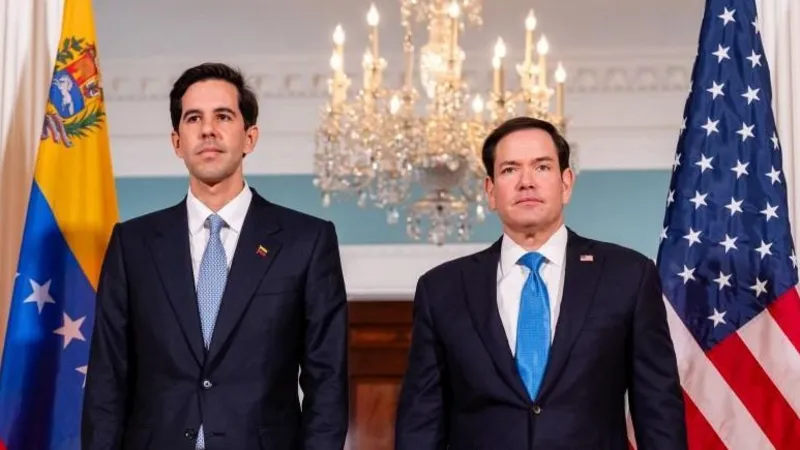
US Secretary of State Marco Rubio met his Venezuelan counterpart, Oliver Blanco, on Monday, calling for their release and discussing reforms to pave the way for free, fair and credible elections, the US State Department said.
The release of political prisoners has long been a key demand of Venezuelan opposition leader María Corina Machado.
Machado, who was awarded the Nobel Peace Prize in 2025, returned to Venezuela on 25 October after spending almost a year in exile. One of her first meetings was with relatives of political detainees.
Many of those still detained were arrested following the 2024 presidential election.
The National Electoral Council (CNE), which is dominated by government loyalists, declared incumbent Nicolás Maduro the winner. However, copies of voting tallies collected by the opposition and verified by independent media indicated that the opposition candidate had won.
The Carter Center, which sent independent observers to Venezuela, also said the election “could not be considered democratic”.
A UN fact-finding mission found that the government had carried out “a harsh repression against persons perceived as political opponents or simply because they express dissent or critical views against the authorities” in the months following the election.
After US forces captured Maduro, his loyal vice-president, Delcy Rodríguez, was sworn in as interim president.
Although Rodríguez has the backing of the Trump administration, opposition parties in Venezuela have voiced frustration over the slow pace of reforms.
In a statement on Monday, the US State Department reaffirmed its commitment to US President Donald Trump’s three-phase plan for Venezuela, which includes “stabilisation, economic recovery and political reconciliation, and democratic transition”.
A week earlier, Rubio had told reporters that Venezuela’s “election infrastructure” needed to be replaced before new elections could be considered valid.
“Not in 10 years, not in five years, not in two years; it needs to happen quickly under the timelines that we’ve established,” he said.
Days later, Rodríguez told Venezuelans in a televised address that “there will be elections” under a “renewed” electoral authority.
However, she did not specify when the vote would take place.
Machado, meanwhile, has been pushing for elections to be held in 2027.
She had previously suggested 24 July 2027, the anniversary of the birth of independence hero Simón Bolívar, as a possible date. However, she has since returned to calling for elections to be held at some point next year.
Source: BBC