

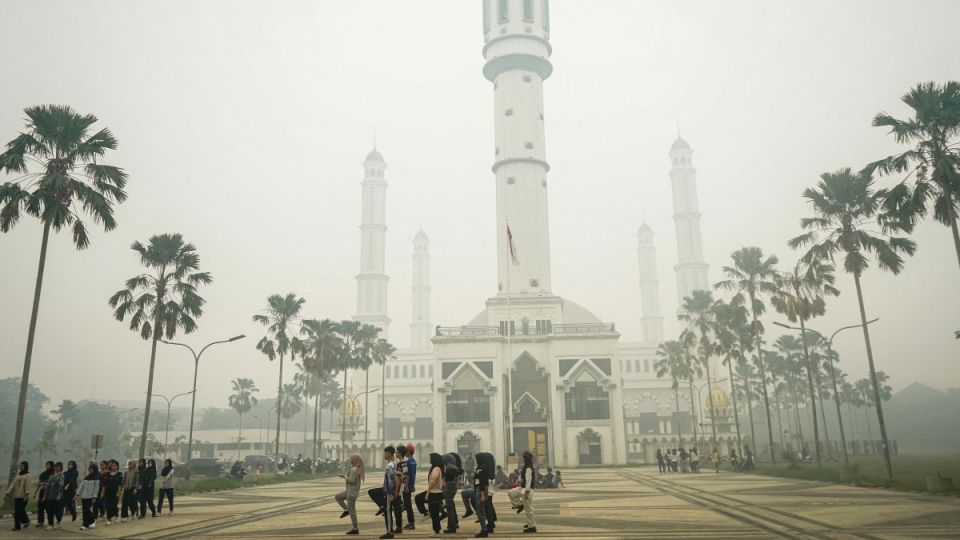
DST News: More than two months into a haze crisis across Southeast Asia, worsening air quality and rising health concerns are increasing public frustration and pressure on authorities to hold those responsible for the fires accountable.
In Palembang, South Sumatra, residents recently experienced some of the worst air pollution of the year. PM2.5 levels reached 1,702 micrograms per cubic meter, more than five times the threshold for the “dangerous” category, according to Indonesia’s Environment Ministry.
Health officials reported that acute respiratory infection cases in Palembang rose from 13,480 in July to 17,434 in September, with fire-prone districts among the worst affected.
The fires have spread across forests and peatlands in several Indonesian provinces, sending smoke beyond the country’s borders. Malaysia and Singapore have also recorded unhealthy air quality.
In Kuala Lumpur, resident Muhammad Syahir said his young daughter was hospitalized for five days after suffering breathing difficulties during the worsening haze.
By late August, nearly 900,000 hectares had burned across Indonesia, according to forest monitoring platform Nusantara Atlas. Environmental groups say deliberate land clearing, including fires linked to plantations and other concessions, has worsened the crisis.
Greenpeace and other groups have urged Indonesia to disclose companies suspected of involvement in the fires, while stressing that Malaysian and Singaporean businesses operating in Indonesia also bear responsibility.
Indonesia’s Environment Ministry said in September that it had seized assets and imposed sanctions on 57 unnamed companies suspected of burning 34,636 hectares across Sumatra and Kalimantan.
Environmental campaigners, however, say stronger enforcement and greater transparency are needed to determine whether those responsible are being held accountable.
Public anger has also grown in South Sumatra, where hundreds of students recently protested outside the provincial governor’s office, demanding stronger peatland protection and more effective measures to prevent and control wildfires.


