

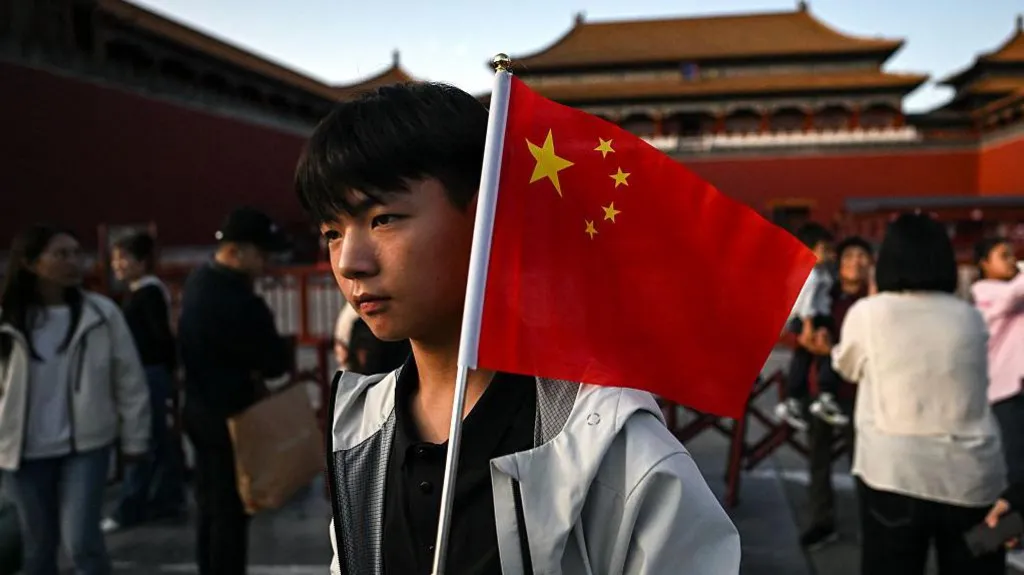
BBC Photo: Four-day meeting of hundreds of Chinese Communist Party (CPC) delegates, chaired by General Secretary Xi Jinping, ended Thursday.
Source: BBC News
DST News: A four-day meeting of hundreds of Chinese Communist Party (CPC) delegates, chaired by General Secretary Xi Jinping, ended Thursday with a communiqué outlining the priorities of China’s next five-year economic plan. The document sheds light on three major themes — a widening anti-corruption campaign, a drive for technological self-reliance, and renewed efforts to boost domestic consumption.
1. Anti-Corruption Drive Appears Deeper Than Reported
Observers have noticed striking absences among the 205 members of the Party’s Central Committee — only 168 attended the meeting. With one member deceased and ten previously expelled, that still leaves 26 senior officials unaccounted for, prompting speculation that the anti-corruption campaign has quietly expanded beyond what has been made public.
The same pattern appeared among military officials: of 33 generals on the Central Committee, 22 were missing, suggesting that several may have been removed in recent disciplinary actions. One of the highest-profile expulsions was He Weidong, formerly the third-ranking officer in the People’s Liberation Army (PLA).
Analysts are divided on whether these purges reflect Xi’s tightening grip on power or a weakened leadership preoccupied with control. Regardless, the Party made clear that the anti-corruption campaign will continue indefinitely.
“The Party will maintain an unwavering tenacity with no finish line in the fight against corruption,” said Jiang Jinquan, Director of the Central Policy Research Office, at a press conference following the meeting.
2. Technological Self-Reliance Takes Center Stage
The communiqué highlights Beijing’s growing determination to reduce its dependence on Western technology amid persistent trade tensions with the United States.
China aims for “substantial improvements in scientific and technological self-reliance,” according to the document. The state news agency Xinhua reinforced this message, saying the country should “achieve greater self-reliance and strength in science and technology and steer the development of new quality productive forces.”
The term “new quality productive forces”, often used by Xi, refers to advanced, homegrown innovation — particularly in sectors such as semiconductors, artificial intelligence, and defense technologies. The strategy seeks closer collaboration between private enterprises, state-owned firms, and the military, minimizing dependence on US chips and software.
With both Washington and Beijing restricting access to each other’s critical technologies — the US in semiconductors, China in rare earth minerals — China’s leadership sees domestic innovation as a matter of national security.
3. Rebalancing Toward Domestic Consumption
China’s slowing exports, worsened by trade tensions and global uncertainty, have renewed focus on the need to boost domestic demand.
The communiqué calls for China to “build a robust domestic market and work faster to foster a new pattern of development.” However, the statement offers few concrete steps on how to encourage spending among cautious consumers.
Experts note that despite years of discussion, China still relies heavily on exports. Rising youth unemployment, a housing crisis, and stagnant wages have made households more inclined to save rather than spend, undermining efforts to stimulate consumption.
While Chinese exporters have managed to offset some US trade losses by finding new buyers elsewhere, economists argue that sustainable growth will depend on confidence at home.
As one analyst put it, “The Party can talk about building a robust domestic market, but it needs solid solutions to get people spending again.”


