

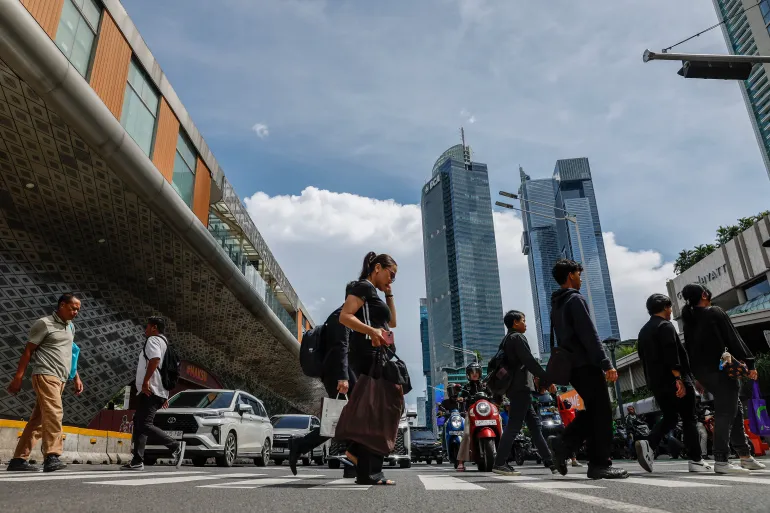
DST News: Jakarta has officially become the world’s most populated city, hosting an estimated 41.9 million people, according to a new report from the United Nations. Bangladesh’s capital, Dhaka, follows closely with 36.6 million residents, marking a dramatic shift in global urban rankings.
The UN’s latest World Urbanization Prospects 2025 study shows how quickly population centres are reshaping, particularly across Asia. Jakarta’s rise to the top pushes Tokyo — long the world’s biggest urban hub — into third place with 33.4 million people, as its population remains relatively stable.
Dhaka, which climbed from ninth position, is projected to become the world’s largest city by 2050, reflecting its explosive pace of growth.
Asia Dominates Global Megacities
The report highlights the growing concentration of megacities — urban regions with more than 10 million residents. There are now 33 such cities worldwide, four times the number recorded in 1975.
Asia alone is home to 19 of the 33 megacities, and nine of the global top 10. Beyond Jakarta, Dhaka and Tokyo, the region’s heavyweights include:
- New Delhi, India – 30.2 million
- Shanghai, China – 29.6 million
- Guangzhou, China – 27.6 million
- Manila, Philippines – 24.7 million
- Kolkata, India – 22.5 million
- Seoul, South Korea – 22.5 million
Cairo, with 32 million people, is the only non-Asian city to make the top 10.
Elsewhere, São Paulo remains the largest city in the Americas with 18.9 million residents, while Lagos continues expanding rapidly as sub-Saharan Africa’s biggest metropolis.
Dhaka’s relentless growth has been fuelled by rural migration, driven by job opportunities but also by worsening environmental pressures such as flooding and sea-level rise. Climate vulnerability continues to push more people toward the capital.
Jakarta faces an even more alarming environmental threat. With significant parts of the city sinking and seas rising, experts warn that up to one-quarter of Jakarta could be underwater by 2050.
These risks have prompted Indonesia to build a new administrative capital, Nusantara, in East Kalimantan on Borneo island. Yet the UN projects that Jakarta’s population will continue to swell, with 10 million additional residents expected by mid-century.
Beyond climate hazards, Jakarta’s expanding population must contend with widening inequality and rising living costs. Those pressures triggered mass protests earlier this year, driven by low-income workers and app-based gig economy riders demanding better conditions.
Other cities are confronting their own challenges. Tehran, for example, has reached nine million residents and is now facing water rationing as supplies dwindle.
The UN’s report also reflects a shift in how urban areas are classified. To improve consistency across countries, cities are now defined as contiguous one-square-kilometre grids with at least 1,500 people per square kilometre and a minimum total population of 50,000. This standardization has led to changes in how some city boundaries and populations are assessed.
Source: Aljazeera


