

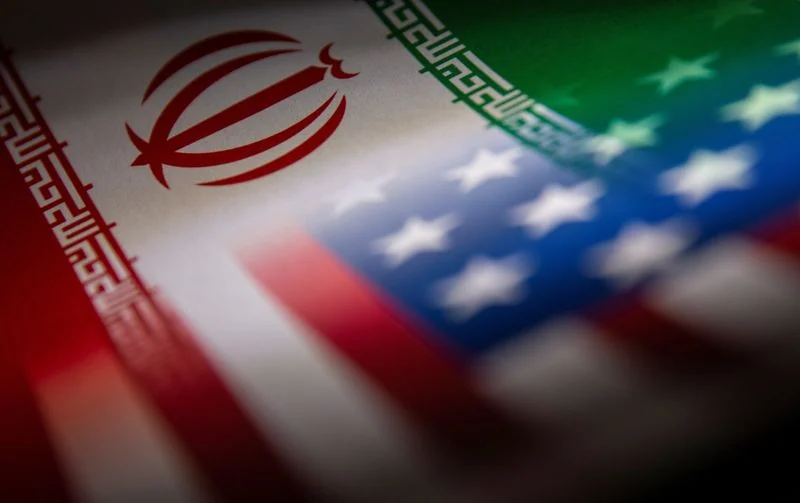
Iran’s senior military spokesperson has warned that any new US attack on the country would trigger a response ten times more severe, escalating the rhetoric following US President Donald Trump’s threat that a future American strike would be five times stronger than previous attacks. The exchange of warnings has heightened concerns about a possible renewed military confrontation between the two countries.
Meanwhile, the humanitarian situation in Gaza has deteriorated further following an Israeli attack on Nasser Medical Complex. At least six Palestinians, including a doctor and a child, were reportedly killed, while more than 20 others sustained injuries. At least four additional Palestinians were also reported killed in Israeli attacks across the Gaza Strip since dawn on Thursday.
The attack on the medical complex has renewed concerns over the safety of healthcare facilities and medical personnel in the besieged Palestinian territory. Hospitals, already operating under severe pressure, continue to face enormous challenges in treating casualties and providing essential medical services amid the ongoing conflict.
Diplomatic efforts to prevent further escalation between Washington and Tehran also remain uncertain. Iran’s Parliament Speaker Mohammad Bagher Ghalibaf, who is leading Tehran’s negotiations, has urged Washington to make and publicly announce a decision on Iran’s latest proposal for ending the war.
His remarks followed Tehran’s rejection of a US proposal to transfer its stockpile of enriched uranium to a third country. The disagreement over Iran’s nuclear programme remains a major obstacle to reaching a diplomatic settlement, with both sides facing difficult questions over security guarantees, nuclear commitments and the future framework of negotiations.
The Strait of Hormuz has emerged as another critical flashpoint. Iran’s Islamic Revolutionary Guard Corps (IRGC) has reported that two supertankers caught fire following what it described as a massive explosion while the vessels were travelling along an unauthorised route through the strategic waterway. The circumstances surrounding the reported incident and the vessels’ identities require independent verification.
The Strait of Hormuz is one of the world’s most important maritime energy corridors, connecting the Persian Gulf with international shipping routes. Any sustained disruption to commercial navigation through the strait could have serious implications for global oil supplies, shipping costs, insurance premiums and energy markets.
The latest developments illustrate how military confrontation, diplomatic deadlock and attacks on civilian infrastructure are increasingly interconnected across the region. A renewed escalation between Iran and the United States could extend beyond their immediate territories, affecting neighbouring countries, international trade and global economic stability.
For the international community, the immediate challenge is to prevent further military escalation while maintaining diplomatic channels. The protection of civilians, respect for international humanitarian law, the security of international shipping and a credible diplomatic process must remain central to efforts to reduce tensions.
As warnings intensify and the situation develops on multiple fronts, the Middle East faces another period of uncertainty, with the consequences extending far beyond the region.
Source: Aljazeera