

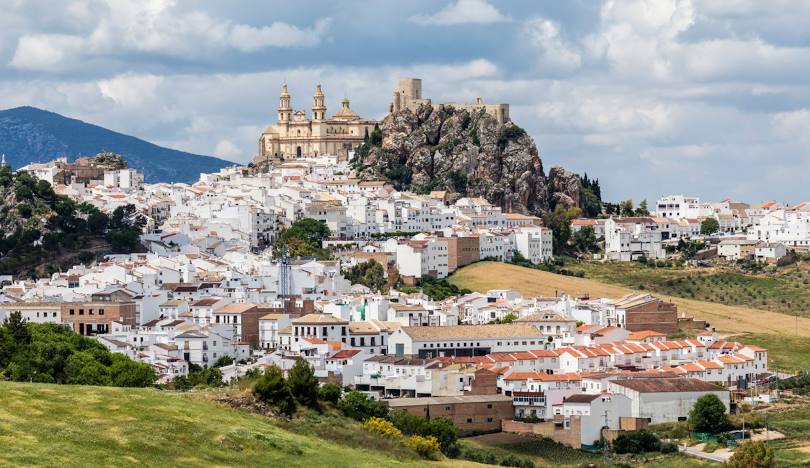
Google Photo: Andulucia
By M. Rahman, PhD, Advisor, Dhaka Straits Times
Introduction: A Civilization That Changed Europe
The history of Muslims in Spain, spanning nearly eight centuries from 711 to 1492, is one of profound cultural, scientific, and architectural influences. Known as Al-Andalus, the Muslim-ruled territories of the Iberian Peninsula became a cradle of learning, tolerance, and artistic brilliance at a time when much of medieval Europe was mired in feudal conflicts and religious orthodoxy. Yet, this period remains subject to intense debate: was it a golden age of coexistence or merely a pragmatic political compromise between Muslims, Christians, and Jews?
The Muslim Conquest: From Tariq to the Umayyads
In 711 CE, Muslim general Tariq ibn Ziyad, under orders from the Umayyad governor of North Africa, crossed the Strait of Gibraltar, named after him (Jabal al-Tariq, meaning “Mountain of Tariq”), and defeated the Visigothic king Roderic at the Battle of Guadalete (Kennedy, Muslim Spain and Portugal, 1996). Within a few years, most of the Iberian Peninsula fell under Muslim control.
By 756 CE, the Umayyad prince Abd al-Rahman I, who escaped the Abbasid massacre in Damascus, established the Emirate of Córdoba, later elevated to a Caliphate by Abd al-Rahman III in 929 CE. This period marked the beginning of political stability and remarkable cultural growth in Al-Andalus (Fletcher, Moorish Spain, 1992).
The Golden Age: A Center of Knowledge and Coexistence
Córdoba, the capital of Muslim Spain, became one of the most advanced cities in medieval Europe. By the 10th century, it boasted paved streets, streetlights, public libraries, and hospitals—amenities unseen elsewhere in Europe (Menocal, The Ornament of the World, 2002). The Great Mosque of Córdoba, an architectural masterpiece, symbolized both religious devotion and artistic innovation.
Intellectual life flourished in Muslim Spain. Scholars like Averroes (Ibn Rushd), Maimonides (a Jewish philosopher living under Muslim rule), and Ibn Arabi contributed immensely to philosophy, science, and theology. The House of Wisdom model of Baghdad found a parallel in Toledo’s translation schools, where Arabic texts were rendered into Latin, reintroducing Europe to the works of Aristotle, Euclid, and Galen (Burnett, Arabic into Latin in the Middle Ages, 2009).
Al-Andalus became the conduit through which ancient Greek and Islamic knowledge reached Europe, sparking the European Renaissance centuries later.
Argument: A Model of Coexistence or a Myth?
Proponents of the “convivencia” theory, such as María Rosa Menocal, argue that Muslim Spain represented a unique model of religious tolerance and cultural symbiosis, where Muslims, Christians, and Jews coexisted peacefully (Menocal, 2002). Indeed, the Jewish Golden Age in Spain, producing scholars like Judah Halevi and Hasdai ibn Shaprut, flourished under Muslim patronage.
However, revisionist historians like Richard Fletcher and Darío Fernández-Morera challenge this idealized view, contending that coexistence was often conditional and politically motivated rather than based on true equality (Fletcher, 1992; Fernández-Morera, The Myth of the Andalusian Paradise, 2016). Non-Muslims, dhimmis, paid a special tax (jizya) and lived under restrictions, though often with more protection and social mobility than in contemporary Christian Europe.
Thus, while Al-Andalus fostered remarkable intellectual and cultural exchanges, it was not a utopia. It was a dynamic, pragmatic coexistence—one that ebbed and flowed with political tides.
Decline and the Fall of Granada
By the 11th century, the Caliphate of Córdoba fragmented into small kingdoms known as Taifas, leading to internal strife. The Christian Reconquista advanced southward, reclaiming territories over the centuries. The arrival of the Almoravids and Almohads from North Africa temporarily restored unity but introduced more rigid religious policies (Kennedy, 1996).
The final chapter of Muslim Spain ended with the fall of Granada in 1492, when Emir Muhammad XII (Boabdil) surrendered to Ferdinand and Isabella, the Catholic Monarchs. The Treaty of Granada initially guaranteed religious freedom to Muslims, but within decades, forced conversions, persecutions, and the expulsion of both Muslims and Jews followed—culminating in the Spanish Inquisition.
Enduring Legacy: Islam’s Imprint on Spain and Europe
Despite its fall, the legacy of Al-Andalus endures. Its impact can be seen in Spanish architecture (the Alhambra, Mezquita of Córdoba), language (over 4,000 Arabic loanwords in modern Spanish), and even agriculture (introducing crops such as rice, sugarcane, and citrus fruits).
Moreover, Al-Andalus symbolizes the intellectual bridge between the Islamic East and Christian West. As historian Hugh Kennedy notes, “Without Muslim Spain, the scientific and philosophical heritage of Greece might have been lost to Europe altogether” (Kennedy, 1996).
Conclusion: Lessons from Al-Andalus
The history of Muslims in Spain is not merely a tale of conquest and decline; it is a profound testament to the possibilities and limits of cultural coexistence. Al-Andalus remains a reminder that civilizations thrive when they embrace diversity, dialogue, and learning.
In an age marked by polarization and cultural misunderstanding, the story of Al-Andalus offers both inspiration and caution: a vision of harmony that was real, but fragile, built not on idealism alone, but on the pragmatism of coexistence.
References:
- Kennedy, Hugh. Muslim Spain and Portugal: A Political History of al-Andalus. Routledge, 1996.
- Menocal, María Rosa. The Ornament of the World: How Muslims, Jews, and Christians Created a Culture of Tolerance in Medieval Spain. Back Bay Books, 2002.
- Fletcher, Richard. Moorish Spain. University of California Press, 1992.
- Fernández-Morera, Darío. The Myth of the Andalusian Paradise: Muslims, Christians, and Jews under Islamic Rule in Medieval Spain. ISI Books, 2016.
- Burnett, Charles. Arabic into Latin in the Middle Ages: The Translators and Their Intellectual and Social Context. Ashgate, 2009.


