

Source: BBC News
DST News: Emerging evidence of widespread and organized killings in Sudan’s city of El-Fasher has led human rights organizations to call the ongoing conflict between the Rapid Support Forces (RSF) and the military a “continuation of the Darfur genocide.”
After enduring an 18-month siege, the fall of El-Fasher exposes both the deep ethnic divisions and the violent legacies that have shaped Sudan’s history. The RSF, which evolved from the Janjaweed militias responsible for the early 2000s atrocities in Darfur, has been accused of carrying out targeted ethnic killings since its power struggle with the army began in April 2023.
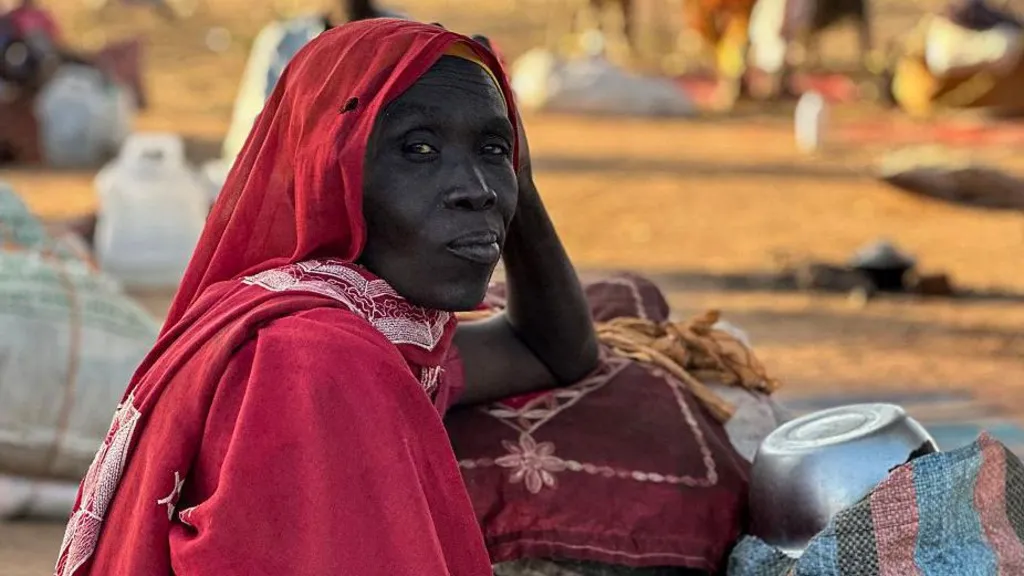
Survivors who managed to escape describe brutal violence and executions. One man told the BBC that looting and shootings occurred indiscriminately, while another woman told Reuters that RSF fighters separated civilians and shot men at checkpoints around the city.
Satellite imagery analyzed by Yale University’s Humanitarian Research Lab reveals what appear to be massacre sites — clusters of bodies and bloodstained areas — leading researchers to conclude that El-Fasher is undergoing a “systematic process of ethnic cleansing” against non-Arab communities through forced displacement and summary executions.
Fighting has taken on a clear ethnic dimension, as Zaghawa militias allied with the army defend the city. RSF fighters reportedly consider Zaghawa civilians legitimate targets — a pattern seen earlier this year when the group overran the Zamzam displacement camp, according to Doctors Without Borders (MSF).
Both warring sides have been accused of war crimes and ethnic reprisals, reflecting Sudan’s long history of weaponizing ethnic identity since the 2003 conflict when the Janjaweed were mobilized to suppress African ethnic groups in Darfur.
Humanitarian groups warn that the pattern of siege, isolation, and mass killing now unfolding in El-Fasher mirrors the 2023 massacre in El-Geneina, which killed up to 15,000 members of the Masalit tribe. Aid organizations, including Protection Approaches and Yale’s Humanitarian Research Lab, describe a deliberate RSF strategy: encircle a city, cut off food and medicine, and then destroy it through systematic arson, sexual violence, and massacres — a process they say amounts to genocide.
Although RSF leader Gen Mohamed Hamdan Dagalo (Hemedti) has acknowledged “violations” and pledged investigations, similar promises after previous atrocities have gone unfulfilled. Analysts doubt the general’s control over his diverse force of militias and foreign mercenaries from Chad and South Sudan.
Aid coordinators and rights activists stress that the international community ignored clear warnings of El-Fasher’s fate. “We repeatedly presented evidence and urged intervention,” said Nathaniel Raymond of Yale’s Humanitarian Research Lab. “This cannot be resolved by statements — it requires immediate action.”
They are also calling for stronger pressure on the United Arab Emirates, accused of providing arms and funding to the RSF — an allegation the UAE denies despite UN and media reports.
As El-Fasher descends deeper into chaos, the city has become a stark reminder of Darfur’s violent past — and a warning of history repeating itself while the world watches in silence.


