

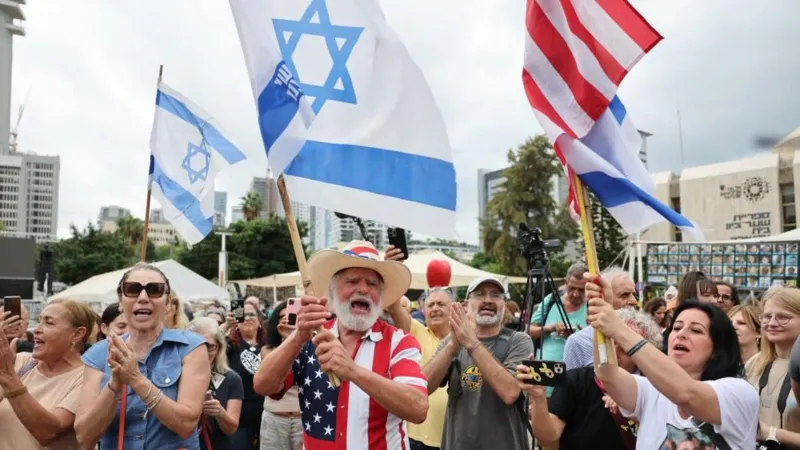
DST News: The results of the US midterm elections have raised serious concerns in Israel about the future of its longstanding alliance with Washington, challenging assumptions about the strength of the relationship between the two countries.
As election results emerged, prominent Israeli figures began warning of a major shift in US attitudes towards Israel. One influential journalist writing in Yedioth Ahronoth, Israel’s largest-circulation newspaper, described the outcome as a potential generational turning point.
“For us in Israel, this will be a generational sea change,” the journalist wrote, adding that Prime Minister Benjamin Netanyahu’s government had “sowed the wind and reaped the tsunami”.
Israeli opposition leaders have blamed Netanyahu for the deteriorating relationship, with one arguing that the election results demonstrated how unpopular the prime minister had become among both Democrats and Republicans.
Netanyahu himself has so far remained silent on the issue.
An unnamed US official familiar with the situation told the BBC that Israeli political leaders had recognised changes in American attitudes but had underestimated their speed and scale.
Israel’s relationship with Washington emerged as a significant issue in several US election campaigns. Many Democratic candidates strongly criticised Israel’s military actions in Gaza and the occupied West Bank, while the financial and political costs of the joint US-Israeli war against Iran also became a major concern for voters.
US President Donald Trump himself blamed the war with Iran for the Republicans’ poor electoral performance. Netanyahu was widely viewed as having encouraged Trump to pursue the conflict.
Vice-President JD Vance also identified America’s relationship with Israel as one of four major reasons voters had turned away from the Republican Party. His remarks reinforced concerns that support for Israel is increasingly becoming a political liability for Washington.
“That might be even worse than what happened in the midterms,” Israeli political and security analyst Yaakov Katz told the BBC. He said that while criticism from Democrats was expected, Vance’s comments suggested that Republican voters were also demanding a change in US policy towards Israel.
What the election results mean for Israel
The immediate concern among Israelis is how the changing political environment in Washington could affect their country’s security and international influence.
For decades, Israel has relied on strong American military and diplomatic backing. That relationship had remained largely intact despite growing criticism among US voters, Trump’s occasional public disagreements with Netanyahu and differences over Israeli military operations in Iran and Lebanon.
Netanyahu had repeatedly highlighted his close relationship with Trump, describing it as a genuine friendship backed by unwavering American support.
Only nine months ago, Israeli forces had fought alongside the US military in a war against Iran. Officials and military spokespeople frequently described the coordination between the two countries as unprecedented.
Against this background, Trump’s unexpected announcement in a Fox News interview this week that he would end $3.8bn in annual US military assistance to Israel two years earlier than scheduled came as a major shock.
For many Israelis, the concern was not simply the potential loss of financial support but what the decision indicated about the country’s standing as an American ally.
Israel’s president described the announcement as “a bolt from the blue”.
Yedioth Ahronoth published a report under the headline “Nobody knows anything”, highlighting the confusion among Israeli officials, who were still trying to determine whether Trump’s remarks were a serious policy decision two days later.
Several days after the announcement, Netanyahu’s office responded by saying that the transition from American financial assistance towards a partnership demonstrated the “strength and sophistication” of bilateral relations.
Although US military assistance accounts for less than 10% of Israel’s annual defence budget, Yaakov Katz, an author specialising in Israeli defence and security, warned that the implications could extend far beyond direct financial support.
He said future funding, arms purchases and joint military programmes could all face delays or complications if Democrats gain control of Congress, even without the two-thirds majority required to override a presidential veto.
“Everything that Israel used to get in a simpler, easier process will now potentially be much more complicated, and Israel has to be prepared that this is a new reality,” Katz said.
He highlighted Israel’s heavy reliance on American-made military equipment, including aircraft, spare parts, weapons and missile-defence systems.
“Our entire Air Force is American-made military planes, we’re dependent on American spare parts and American weapons. The last three years have shown us how dependent we are on American missile-defence systems,” he said.
Katz warned that any reduction or delay in American supplies could significantly affect Israel’s ability to sustain military operations and withstand future conflicts.
He also suggested that the election results could lead Washington to impose stronger conditions on Israel’s military actions in Gaza and Lebanon and demand that it avoid undermining any agreement with Iran.
A US official familiar with the matter said the relationship would likely undergo some changes, particularly with Washington becoming more willing to criticise Israeli policies when necessary. However, the official maintained that the fundamental alliance would remain intact.
Growing criticism from both US parties
Despite the political uncertainty, some American officials have indicated that Washington’s core positions on Israel have not yet changed significantly.
In an interview with Israeli television, US Ambassador to Israel Mike Huckabee expressed little indication of a shift in fundamental American policy. He also described sanctions imposed by other countries over Israel’s occupation of the West Bank as irrational and counterproductive.
Israel’s ambassador to the United Nations, Danny Danon, similarly argued that Israel could remain confident in Trump’s support during the next two years of his presidency. He pointed to Washington’s repeated use of its UN Security Council veto to block resolutions targeting Israel.
However, Danon acknowledged that Israeli leaders must pay attention to growing criticism within both political parties in the US.
He warned that maintaining American support would become increasingly difficult.
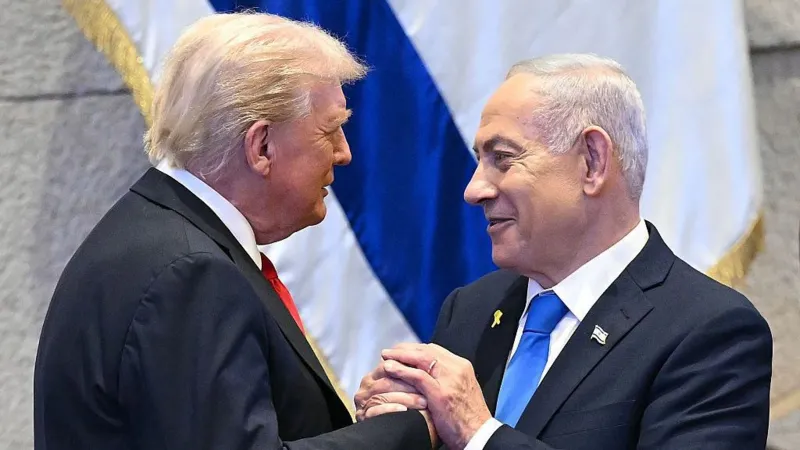
The uncertainty surrounding the alliance has emerged at a particularly sensitive moment for Israel. Less than two weeks ago, the country’s parliamentary elections ended without either the government or opposition securing a clear majority.
Political consultations are now under way with Israel’s president, who will decide whether Netanyahu or his centrist rival, Gadi Eisenkot, should receive the first opportunity to form a governing coalition.
Eisenkot has promised to restore and strengthen Israel’s relationship with Washington, including its traditionally bipartisan support.
In a social media post, he said his leadership would renew and deepen the partnership while reinforcing the bipartisan foundations that had sustained it for decades.
Another opposition leader, Yair Lapid, called for Israel to return to a longstanding principle of maintaining relations with both American political parties rather than aligning itself with one side.
He argued that this approach had served Israel well for 70 years but was undermined in 2015 when Netanyahu addressed the US Congress to oppose President Barack Obama’s proposed nuclear agreement with Iran.
That speech, delivered without the support of the Democratic president, is widely regarded as a turning point in US-Israeli relations.
Since then, Netanyahu has increasingly tied Israel’s political relationship with Washington to Trump’s Republican Party, contributing to growing alienation among Democrats.
The US official who spoke to the BBC suggested that Netanyahu could previously have improved relations by dismissing two far-right members of his government. However, the official now believes the problem has become much broader than the composition of Israel’s cabinet.
The changing relationship with Washington is also expected to influence negotiations over Israel’s next government.
Some Netanyahu supporters argue that the current uncertainty makes political stability more important and that the prime minister’s experience and established relationships with American leaders make him the strongest candidate to lead the country.
An opinion writer in the right-wing Israel Hayom, another major Israeli newspaper, argued that the country could not afford prolonged political disputes and repeated election campaigns.
However, whoever leads Israel’s next government may find that maintaining American support requires more than diplomatic statements and political rhetoric.
Amid the growing debate over the future of the alliance, Netanyahu’s silence is particularly striking. The prime minister, once regarded as an influential figure in Washington’s political circles, has yet to publicly address the concerns raised by the election results.
Source: BBC