

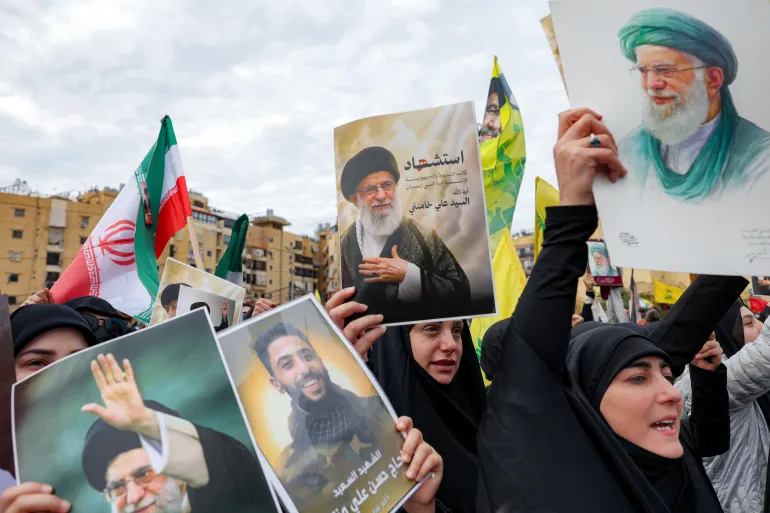
DST News: Lebanon’s armed group Hezbollah has pledged to confront what it described as “American and Israeli aggression” following the killing of Iran’s Supreme Leader Ayatollah Ali Khamenei in joint US–Israeli strikes on Tehran.
In a statement released on Sunday, the Iran-aligned movement offered condolences over Khamenei’s death, which occurred early Saturday during an offensive carried out by the United States and Israel. Hezbollah said the attack also killed several Iranian officials and civilians.
Describing the strike as an act of extreme criminality, Hezbollah said that targeting Khamenei — whom it called “the leader of the nation” — represented “the height of American and Zionist aggression.” The group vowed to fulfil its duty in confronting the attacks, declaring that it would not retreat from what it called the “path of resistance,” regardless of the sacrifices involved.
“We will not abandon the field of honor and resistance, nor the confrontation against American tyranny and Zionist criminality, in defense of our land, our dignity, and our independent choices,” the statement said.
Despite its strong rhetoric, Hezbollah has so far taken no direct military action against Israeli or US targets since the strikes on Iran began.
Meanwhile, Lebanese state leaders have sought to distance the country from any escalation. President Joseph Aoun said after an emergency meeting of Lebanon’s Higher Defense Council that decisions of war and peace rest solely with the Lebanese state.
Prime Minister Nawaf Salam echoed that position, warning against actions that could endanger national security and unity. Calling for restraint, he urged all political actors to act with wisdom and prioritize Lebanon’s interests amid growing regional tensions.
Lebanon remains fragile after a year-long conflict between Hezbollah and Israel that ended with a ceasefire in November 2024. However, Israeli strikes inside Lebanon have continued, in violation of the agreement, and Israeli forces still maintain several military positions within Lebanese territory.
As tensions rise across the region, Lebanon finds itself once again caught between internal political caution and the wider fallout of a rapidly escalating Middle Eastern conflict.


