DST News: For much of the past year, relations between India and China appeared to be moving towards a cautious recovery. However, recent developments suggest that the improvement in ties following the deadly border clashes of 2020 may be more fragile than previously believed.
The latest concerns emerged after India’s border police chief claimed that Chinese troops had returned to disputed areas along the Himalayan frontier in large numbers earlier this year and pitched tents several kilometres inside territory claimed by India.
The remarks by Shatrujeet Singh Kapur, Director General of the Indo-Tibetan Border Police (ITBP), have sparked political controversy in New Delhi. Such public statements by serving officials are unusual, as sensitive border issues are generally addressed by the federal government through its defence or foreign ministries.
Speaking at a recent gathering of officers in Rajasthan, Kapur said confrontations between Indian and Chinese troops had occurred at several locations in the north-eastern state of Arunachal Pradesh and were continuing. According to him, the incidents began in July, but both sides initially withdrew.
A few days later, he said, Chinese troops returned in greater numbers and pitched tents approximately six to seven kilometres inside India’s perception of the Line of Actual Control (LAC).
The LAC is an ill-defined boundary separating territories controlled by India and China. The two countries have disputed the 3,440-kilometre (2,100-mile) Himalayan frontier for decades.
China claims Arunachal Pradesh as part of southern Tibet, while India firmly rejects this claim, maintaining that the state is an integral part of its territory.
The dispute is among the most enduring challenges inherited by independent India following the end of British colonial rule in 1947. It led to a brief border war in 1962, in which India suffered a significant defeat.
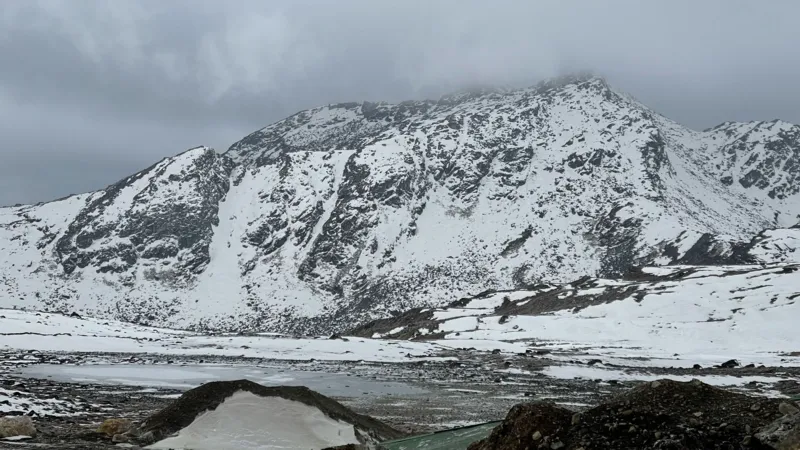
More than six decades later, much of the frontier remains undemarcated, with both countries maintaining overlapping territorial claims. The region’s rugged landscape further complicates the situation, as changing river courses, lakes and snow-covered mountains make it difficult to establish a clearly defined boundary.
Consequently, troops from the two countries sometimes encounter one another along the frontier, leading to confrontations, violence and diplomatic tensions.
The 2020 Clashes and Subsequent Diplomatic Efforts
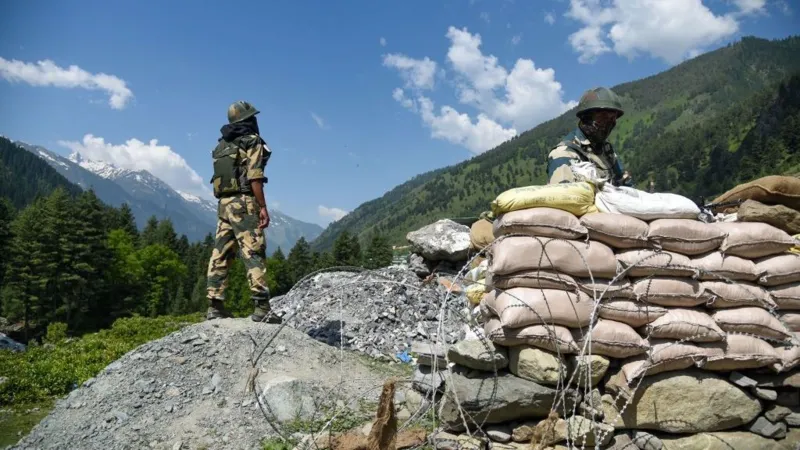
The most serious recent escalation occurred in June 2020, when Indian and Chinese troops clashed in the Galwan Valley in Ladakh. At least 20 Indian soldiers and four Chinese soldiers were killed.
It was the first deadly confrontation between the two sides since 1975. Opposition parties in India accused Prime Minister Narendra Modi’s government of allowing China to take control of Indian territory, an allegation the government has repeatedly denied.
The clashes severely damaged bilateral relations, disrupting diplomatic engagement and affecting trade and travel between the two countries.
Following several rounds of negotiations, India and China agreed in 2024 to take steps towards reducing tensions along the border. Since then, both sides have moved towards restoring direct flights and easing visa restrictions introduced after the clashes.
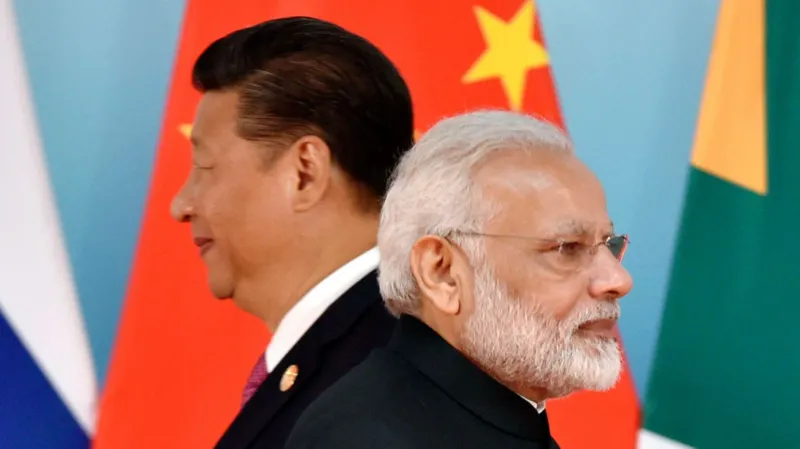
Chinese President Xi Jinping also visited India in September for the BRICS summit, marking his first visit to the country in seven years.
These developments raised hopes that relations between the two countries could gradually return to normal. However, the latest reports of border confrontations have renewed questions about how much progress has actually been achieved on the ground.
Following Kapur’s remarks, India’s main opposition Congress party again accused Modi of making concessions to Beijing.
“The prime minister and his entire apparatus remain silent on this grave issue,” senior Congress leader Jairam Ramesh wrote on X.
The Indian government has not explicitly denied Kapur’s account that Chinese troops pitched tents several kilometres inside what India considers its side of the LAC.
Foreign Ministry spokesperson Randhir Jaiswal said last week that tensions in border areas arise periodically when Chinese forces depart from established patrolling patterns.
He added that the two countries were using military and diplomatic channels to address unresolved issues but provided no further details.
A spokesperson for China’s Foreign Ministry, meanwhile, said Beijing had consistently and strictly complied with the relevant agreements reached with India. The spokesperson added that Chinese forces conducted routine patrols and border management activities to safeguard the country’s territorial sovereignty.
Experts Warn of China’s Growing Military Assertiveness
Experts say Kapur’s remarks offer a rare insight into what they describe as China’s increasingly assertive military posture along the disputed frontier.
Shyam Saran, a former Indian foreign secretary who led several rounds of border negotiations with China in the mid-2000s, told the BBC that Chinese attempts to test India’s position at different points along the Arunachal Pradesh border had been taking place for some time.
According to Saran, such actions are not necessarily intended to trigger an immediate war but may gradually establish new realities on the ground.
Indian opposition parties have repeatedly accused China of expanding its presence in both Ladakh and Arunachal Pradesh, contributing to continued tensions.
Zhou Bo, a retired senior colonel in China’s People’s Liberation Army who is now associated with Tsinghua University in Beijing, said both countries had learned lessons from the 2020 Galwan Valley clashes.
He stressed that both sides should exercise greater caution to prevent similar incidents in the future. He also noted that Chinese media had not reported the latest confrontations in Arunachal Pradesh.
Economic Dependence Adds to the Complications
Border tensions are unfolding alongside an increasingly complex economic relationship between the two countries.
Despite their political and territorial disagreements, India and China remain major trading partners. Bilateral trade reached $151bn last year, although the balance heavily favoured Beijing, with Chinese exports to India accounting for approximately $131bn.
India continues to depend on Chinese imports for machinery, rare earth magnets, electric vehicle batteries and pharmaceutical products.
This reliance means that tensions with Beijing can have consequences far beyond the disputed frontier, particularly for Indian industries and infrastructure development.
Last week, China also announced restrictions on exports of tunnel-boring machines used in metro rail and highway construction. Beijing said the measures were intended to protect national security and national interests.
Although the restrictions were not specifically directed at India, they could affect the country’s ambitious infrastructure development plans.
Christopher Clary, a professor at the University at Albany in New York, told the BBC that Chinese policy towards India was intended to complicate India’s rise, including its efforts to develop advanced technological and manufacturing capabilities.
A similar challenge emerged last year when China restricted exports of rare earth magnets, which are widely used in electric vehicles, smartphones, wind turbines and medical scanners.
The restrictions temporarily disrupted supplies to Indian industries, demonstrating how China’s control over critical materials can affect international supply chains.
India is now attempting to develop domestic production capacity for rare earth magnets. However, establishing the necessary industrial capabilities will require considerable time and investment.
Border Communities Face Everyday Consequences
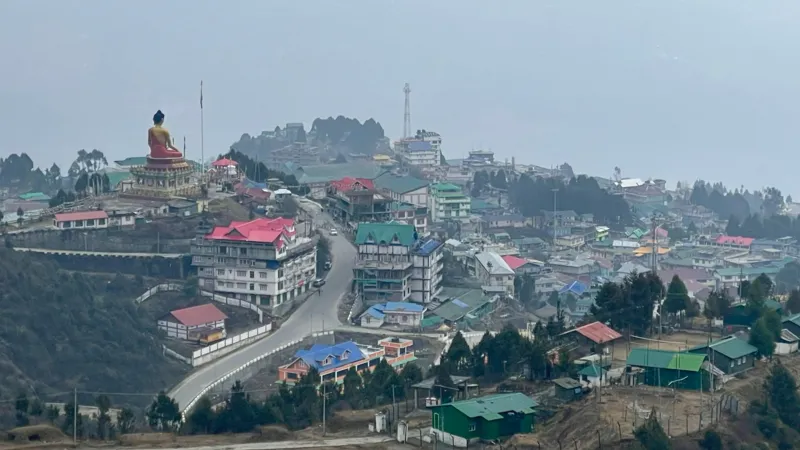
Arunachal Pradesh has long been a focal point of tensions between India and China. For communities living near the disputed frontier, the consequences are immediate and personal.
Tongam Rina, a senior journalist with the Arunachal Times, said residents of some border villages had reported losing access to grazing lands because of Chinese incursions and encroachment.
She noted that the problem was not new and had continued for a long time, contributing to a growing sense of insecurity among local communities.
Villagers often avoid returning to areas considered prohibited for activities such as hunting and yak rearing. Many remain uncertain about when they will be able to access those areas again.
The border dispute also has broader strategic implications for New Delhi. There is growing concern that US President Donald Trump’s emphasis on expanding economic engagement with China could limit Washington’s willingness to support India in a future confrontation with Beijing.
Although China may have little interest in a full-scale conflict with India, analysts suggest that Beijing could see strategic advantages in allowing the dispute to remain unresolved.
As China’s economic and military strength increases, it may calculate that maintaining a prolonged stalemate would improve its position in future negotiations.
For India, the latest reported confrontations serve as a reminder that improving diplomatic relations do not necessarily guarantee lasting stability along the disputed border.
Source: BBC