

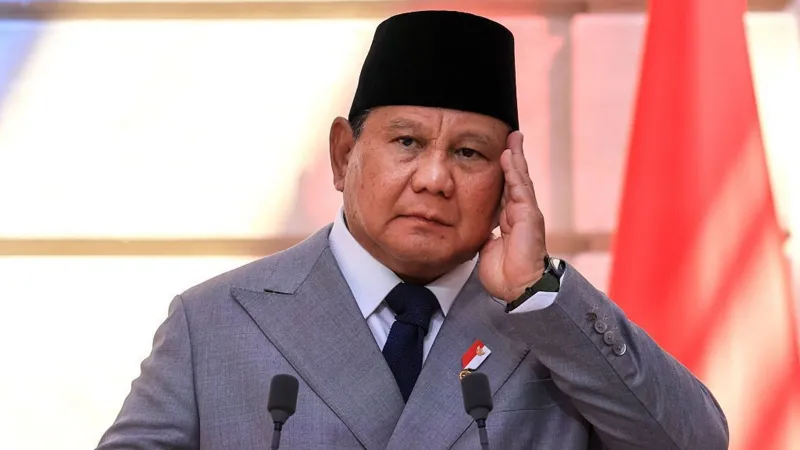
DST News: Indonesian authorities are investigating possible treason following revelations that President Prabowo Subianto’s phone conversations may have been intercepted in an alleged wiretapping operation.
The scandal, which emerged this week, has implicated several senior officials in Prabowo’s administration, including his former chief of staff, Listyo Sigit Prabowo. Despite sharing the same surname, Listyo is not related to the president.
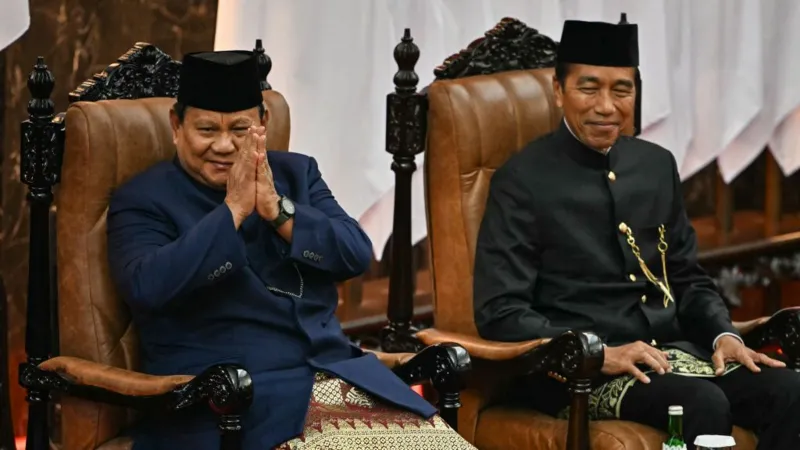
The controversy is unfolding amid growing speculation about a widening political rift between Prabowo and his predecessor, Joko Widodo, widely known as Jokowi, who backed Prabowo’s successful presidential campaign in 2024.
“Listyo’s position, as we know, is actually very close to Jokowi,” Made Supriatma, a visiting fellow at Singapore’s ISEAS-Yusof Ishak Institute, told BBC Indonesian.
“So now it’s practically said that they’re going their separate ways.”
What happened?
Listyo Sigit Prabowo, who served as the president’s chief of staff, was arrested on Tuesday alongside two senior police officers over allegations of spying on President Prabowo.
The three suspects are accused of entering several telephone numbers, including the president’s, into the police’s official electronic surveillance system without following the required legal procedures. Such procedures include obtaining an investigation warrant or filing an official case report.
Authorities said the alleged operation was uncovered last week after a police officer provided a tip-off. However, investigators believe the surveillance may have started in 2025, when Listyo was still serving as the national police chief.
A spokesperson for the president said on Wednesday that the alleged operation could constitute treason because it involved “sensitive information” that could “endanger the interests and sovereignty of the nation”.
Treason carries severe penalties in Indonesia, including life imprisonment or the death penalty, although the country has not carried out an execution in the past decade.
The presidential spokesperson said investigators had yet to establish the motive behind the alleged surveillance.
President Prabowo was not the only alleged target. Authorities said the operation may also have involved politicians, journalists, representatives of non-governmental organisations and businesspeople.
On Thursday evening, police identified a fourth suspect, Slamet Uliandi, a member of the national police’s criminal investigation unit. However, he was not detained because of his poor health following a stroke, according to authorities.
Listyo, who had been appointed chief of staff only last month, was dismissed from the position shortly after his arrest.
Indonesia has faced similar wiretapping controversies involving its political leaders before. In 2014, surveillance devices were discovered at Jokowi’s official residence while he was serving as Jakarta’s governor. Former president Megawati Soekarnoputri also claimed in 2024 that she had avoided using her personal mobile number because she believed she was being monitored.
National Police Chief Suyudi Ario Seto said on Thursday that the investigation was strictly a law enforcement matter and had no connection to political rivalries.
Nevertheless, many observers view the scandal as another indication of the deteriorating relationship between Prabowo and Jokowi, who governed Indonesia from 2014 to 2024.
Prabowo and Jokowi: An alliance under pressure
Jokowi played a significant role in securing Prabowo’s victory in the 2024 presidential election by publicly backing his candidacy. Their political alliance also helped Jokowi’s eldest son, Gibran Rakabuming Raka, become Indonesia’s vice-president.
Two years later, however, the partnership appears to be weakening, although neither side has officially acknowledged a split.
Since taking office, Prabowo has shown limited enthusiasm for continuing Jokowi’s flagship development project: the construction of Nusantara, Indonesia’s planned new capital. Instead, his administration has prioritised a nationwide free school meals programme, directing substantial state resources towards the initiative.
Prabowo has also reshuffled several senior government positions over the past year, moving a number of Jokowi’s allies into different roles. Among them was long-serving finance minister Sri Mulyani Indrawati.
Meanwhile, Gibran is facing growing scrutiny over the validity of his high school qualifications, which are a requirement for running for vice-president. The controversy has prompted calls for his disqualification, with critics questioning whether he was legally eligible to contest the election.
The latest wiretapping scandal has further intensified tensions between the two political camps. Listyo, who rose through the police ranks under Jokowi’s administration, is widely regarded as a longtime ally of the former president.
Asked about the allegations after a court hearing on Thursday, Jokowi urged the public to respect the ongoing legal proceedings.
The scandal has emerged during an increasingly challenging period for Prabowo’s presidency. His flagship free school meals programme is facing funding difficulties, while parts of Indonesia have recently experienced the country’s worst wildfires in a decade. The national stock market is also under pressure amid allegations of widespread market manipulation.
Analysts say the political turmoil has diverted attention from more immediate problems facing ordinary Indonesians, including economic uncertainty and environmental pollution.
In recent months, protesters have taken to the streets to demand government action on several issues, including toxic wildfire haze, corruption and rising living costs.
“It’s like we’re living in a country on autopilot,” Nicky Fahrizal, a researcher at Indonesia’s Centre for Strategic and International Studies, told BBC Indonesian.
“Because the way the government operates proves that it’s not the people’s interests that are being pursued, but rather the interests of individual groups.”
Source: BBC