

Friday, October 17, 2025
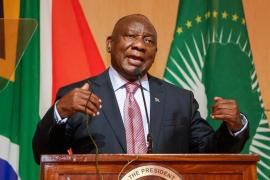
SAnews Photo:
By SAnews.gov.za
President Cyril Ramaphosa has hailed South Africa’s National School Nutrition Programme as one of the country’s most influential and life-changing initiatives aimed at supporting the poor since the beginning of democracy.
Delivering the keynote address at the 7th Social Justice Summit at the Cape Town International Convention Centre, the President highlighted the programme’s far-reaching impact on education and child development.
Currently, the school feeding initiative provides nutritious meals to approximately 9.7 million learners from low-income households during the school week. Research indicates that the programme has led to significant improvements in school attendance, classroom focus, and academic achievement.
“To put this in perspective, when we assess the long-term outcomes, learners from quintile 1 to 3 schools made up 67% of all bachelor passes last year,” Ramaphosa said. “These young people, now empowered to pursue their aspirations, benefited from 12 full years of consistent nutritional support through this programme.”
The President emphasized that the School Nutrition Programme is not merely a social assistance measure but a transformative, development-oriented policy that has reshaped opportunities for millions of children.
“Without question, this is among the most progressive and pro-poor policies of our democratic era. It is a strategic investment in a healthier, more educated, and equitable future,” he remarked.
Ramaphosa further noted that the government has enhanced the programme by ensuring that learners now receive two daily meals—breakfast and lunch.
“Many children arrive at school without having eaten in the morning, so introducing breakfast alongside lunch has made a truly meaningful difference,” he added.
Social Grants Supporting Families
The President also underscored the essential role of social grants in strengthening food security among vulnerable households.
“For millions of South Africans, the social grant system serves as a lifeline. Its contribution to reducing hunger and improving nutrition cannot be overstated,” he said.
He pointed to extensive evidence from both government and civil society organizations confirming that access to social grants correlates with better nutrition outcomes and reduced food insecurity.
Citing findings from the National Income Dynamics Study/Coronavirus Rapid Mobile Survey (NIDS-CRAM), Ramaphosa explained that the Social Relief of Distress (SRD) grant introduced during the COVID-19 pandemic lifted around 2 million people above the food poverty line in 2021.
Broader Government Efforts
The President went on to outline additional government measures to combat hunger and promote food security since the advent of democracy.
These include provincially managed programmes that encourage household and community food production, such as backyard and urban food gardens.
At the primary healthcare level, nutrition interventions have been strengthened through breastfeeding promotion, micronutrient supplements for pregnant women, and the implementation of a National Obesity Strategy.
Ramaphosa also noted that since 2003, the government has mandated food fortification for staple items such as wheat and maize flour, aimed at reducing micronutrient deficiencies.
In addition, fiscal and market-based initiatives have been introduced to improve food affordability. Since 1991, South Africa has implemented zero-rating on basic food items to assist low-income households, and the list of exempted products continues to expand.
“In 2018, we also introduced a health promotion levy on sugar-sweetened beverages as part of broader efforts to curb diabetes, obesity, and related illnesses,” the President said.
Call for Action
Concluding his address, Ramaphosa urged delegates at the summit to renew their shared commitment to eradicating hunger and promoting social justice.
“We must reaffirm our belief that true social justice cannot coexist with hunger. The right to food is not just an indicator of policy effectiveness—it is a reflection of our shared moral conscience,” he asserted.
The Social Justice Summit, aligned with South Africa’s leadership within the G20, seeks to advance the African agenda and promote global cooperation.
Functioning as a platform for intersectoral collaboration, the summit focuses on constitutional mandates and policy interventions that position food justice as a cornerstone for social cohesion, regional food security, and international solidarity.
— SAnews.gov.za


