

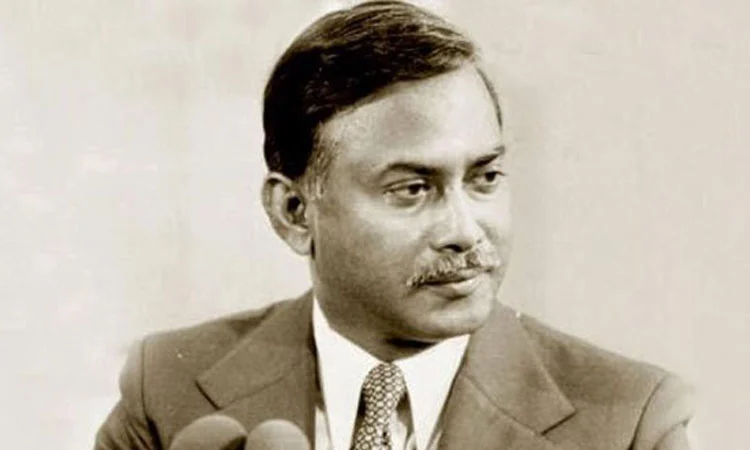
By M. Rahman, PhD, Adviser, Dhaka Straits Times,
Shaheed President Ziaur Rahman, Bir Uttam, holds a central place in Bangladesh’s history for his decisive leadership at moments of national crisis. At the height of Pakistan’s brutal military crackdown in March 1971, when fear and confusion gripped the nation, it was his clear and courageous declaration—“I, Major Ziaur Rahman, do hereby declare the independence of Bangladesh”—that gave direction and hope to the people.
On the night of March 25, 1971, amid indiscriminate violence and genocide, Ziaur Rahman emerged as the defining voice of the Liberation War. His declaration—first to his battalion and later broadcast from Kalurghat Radio Station—removed all ambiguity by affirming Bangladesh as an independent state. It boosted public morale and helped transform scattered resistance into an organized armed struggle.
Patriotism defined Ziaur Rahman’s life from an early age. Even while serving in the Pakistan army, he remained deeply committed to Bangladesh and strongly protested any insult to its people or leaders. His leadership during the Liberation War as a sector commander further cemented his role as a fearless freedom fighter.
After independence, Bangladesh entered a turbulent period marked by coups and instability. Following the political upheavals of 1975, Ziaur Rahman re-emerged on November 7 as a unifying force, restoring order and safeguarding national sovereignty. His leadership gained acceptance across the military, civil administration, political circles, and the international community, eventually leading to his emergence as a legitimate civilian president.
As president, Ziaur Rahman earned recognition as a nation builder. He introduced a clear development vision through his 19-point program and laid the foundation of Bangladesh’s economy on agriculture, industrial growth—particularly the garment sector—and overseas employment. His policies helped move the country toward food self-sufficiency, expand exports, and increase remittance inflows.
Ziaur Rahman also restored multiparty democracy, ending one-party rule and reintroducing political pluralism. He articulated the idea of Bangladeshi nationalism—an inclusive identity based on geography rather than religion or language alone. His tenure saw the restoration of press freedom, efforts to curb corruption, industrial revival, and greater focus on farmers, workers, youth, and women.
In foreign policy, he broadened Bangladesh’s diplomatic reach, strengthened ties with major global and Muslim nations, played a leading role in the formation of SAARC, and secured Bangladesh’s election to the UN Security Council as a non-permanent member.
Ziaur Rahman repeatedly stepped forward at critical moments—declaring independence in 1971, preserving sovereignty in 1975, and guiding the nation toward political stability and economic reconstruction. For these enduring contributions, he is remembered as a true patriot and a great nation builder whose legacy continues to shape Bangladesh.


